
 Civilization V
 Cheap Car Repair
 Clank!
 Chained Echoes
 Celeste
 Cat Quest III
 Castle Crumble
 Command & Conquer: Generals



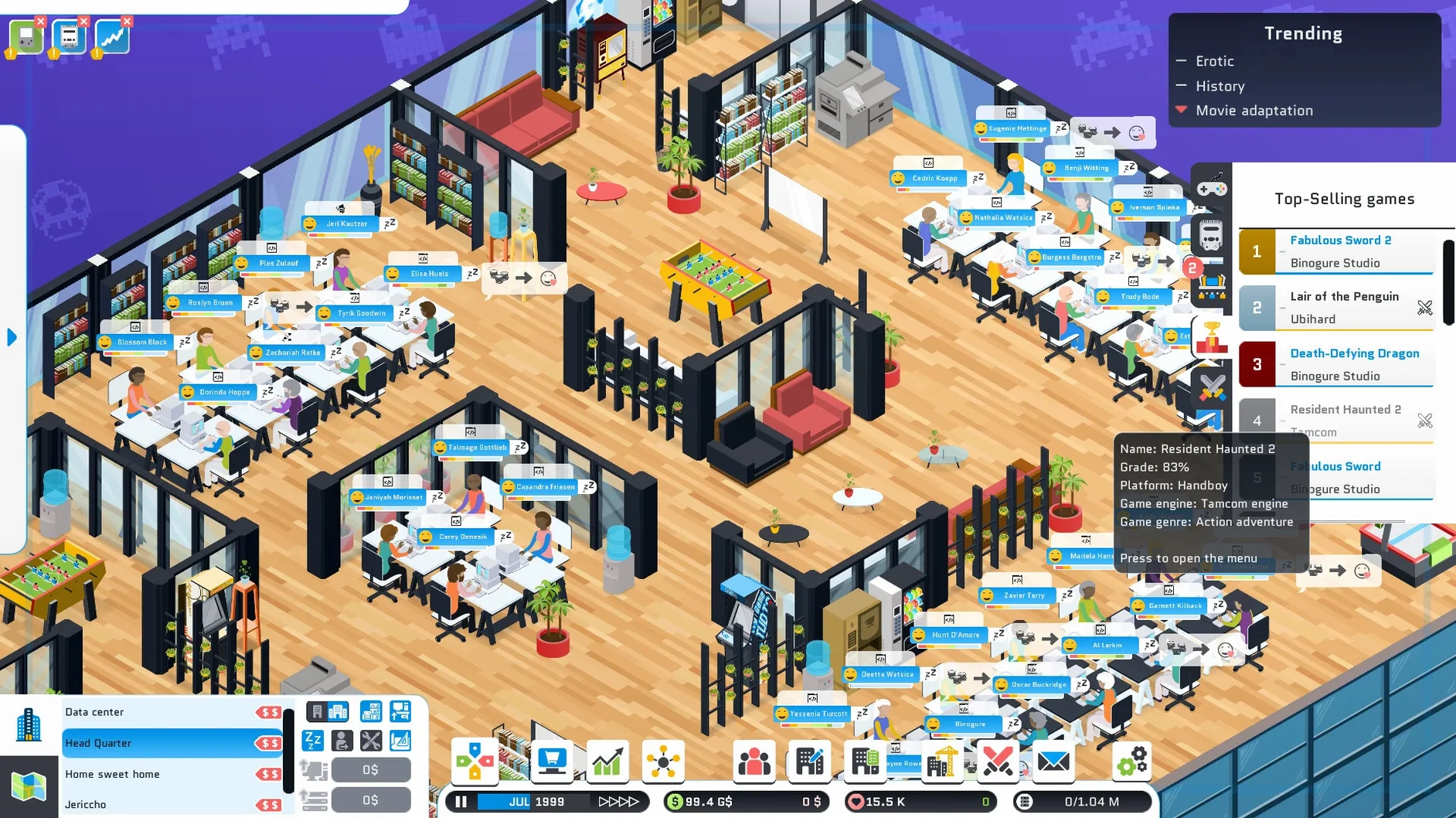
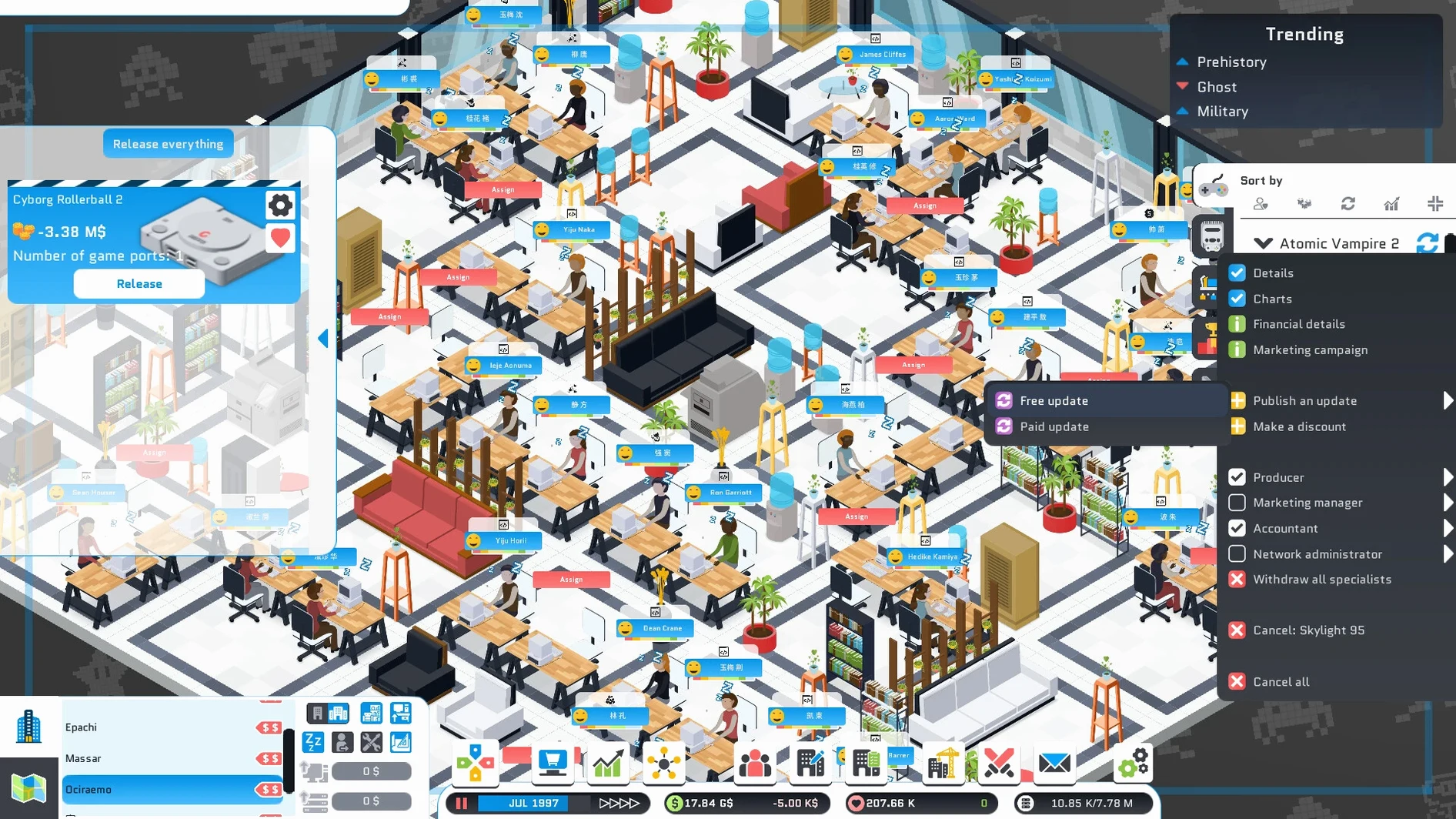
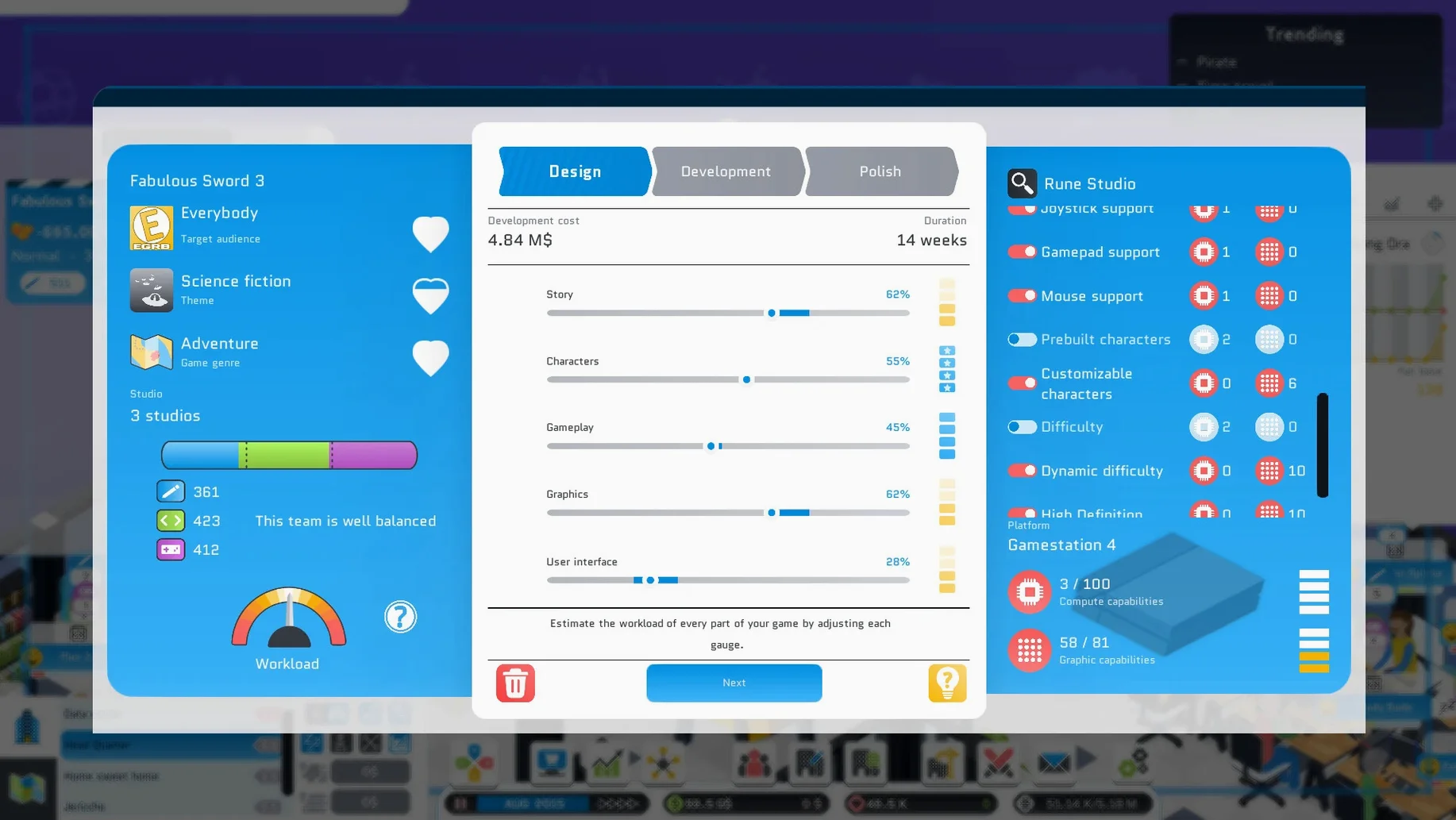
1. You spot a rival’s release date slipping, so you tweak your own marketing campaign to land first.
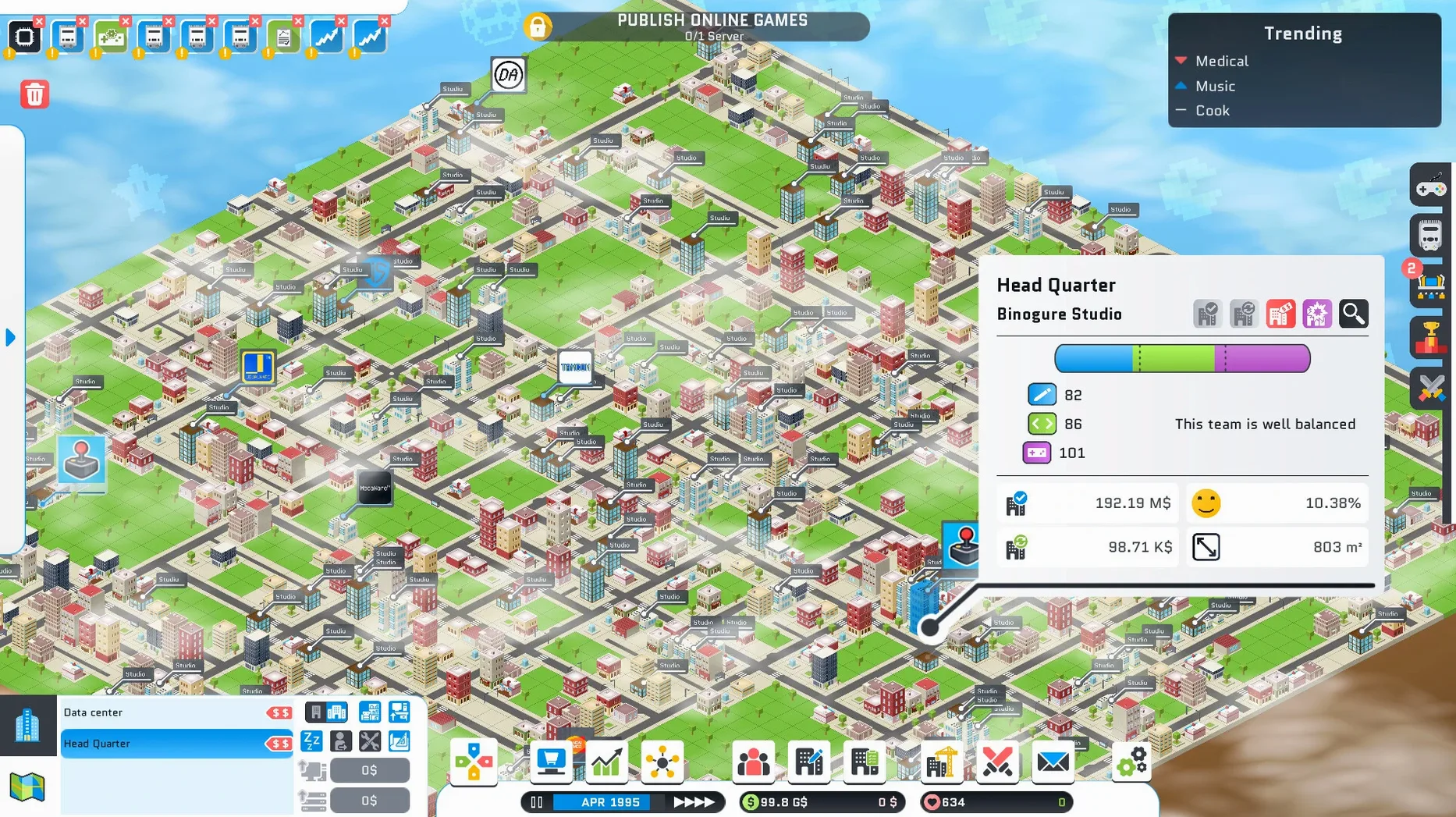
2. The extra sales let you lease a second building, which means you can finally hire a dedicated tester without cramming desks together.
3. With the QA workload off your senior developer, you start porting your back catalogue to a new console while the newbie team experiments with a rented engine.
That rhythm—watching one small choice ripple across schedules, real estate and platform strategy—is where City Game Studio clicks. It rewards players who enjoy spreadsheets in spirit but want the friction wrapped in a clean, pixel-art interface. If you liked Game Dev Tycoon and wished for more moving parts (employee morale, competitor espionage, multi-building logistics), this will pull you in for long sessions. It’s less about designing a single hit and more about keeping a whole company afloat across years.
The flip side: if you want snappy pacing or a tutorial that holds your hand, the early hours can feel like staring at a cockpit of unlabelled dials. The simulation is granular—you assign lunch breaks, balance console licensing fees, and decide whether to spy on a rival or invest in engine tech. That’s catnip for tinkerers, but anyone after a breezy creative toy might find it overly mechanical. Know what you’re signing up for, and it’s a satisfyingly deep time-sink.
Early 1976. You’ve got a folding table, a rented corner office and enough cash for about three payroll cycles. The first job is simple: prototype something fast on the cheapest engine you can rent. Two developers, no artist yet—stick to text-heavy genres. Ship it before the cash runs dry.
Once that first title sells a few hundred copies, the priority shifts. Hire an artist and start scouting publishers. Their advance lets you port the same game to a second platform without draining reserves. While the publisher handles distribution, your team experiments with engine tech that’ll carry the next three projects.
Mid-game, the loop tightens. You’re juggling two buildings, a digital storefront and a marketing campaign timed to undercut a rival’s expo reveal. A tester catches a bug that would’ve tanked your console submission—that’s the QA hire paying for itself. By year five, you’re buying out a smaller studio whose engine you’ve been renting, absorbing their IP into your catalogue. The arc from renting a cramped room to managing a multi-team operation isn’t scripted; it’s the natural shape of the decisions you make.
City Game Studio plays nicely with the Mac habits you already have. Keep Numbers or a plain text scratchpad open on the second desktop to track which console generation each title targets—the game doesn’t surface that info in one view. macOS focus modes are handy for long late-night sessions; flick on Do Not Disturb and the simulation swallows the whole screen.
The pixel-art UI respects standard Mac window behaviour, so dragging between Spaces feels native. If you’re the type who leaves Notes running with a log of competitor release dates and expo schedules, the game rewards that outside-the-app note-taking without demanding it. It’s one of those city game studio your game dev adventure begins mac torrent titles where building your own external systems—a spreadsheet, a few stickies—becomes part of the appeal, not a chore.
The interface is available in Russian, English, German, Spanish, Italian, Simplified Chinese, Korean, Dutch, Polish, Portuguese, Turkish, Ukrainian, French, Czech and Japanese.
It was developed by Binogure Studio and built on the Godot Engine.
You can recruit artists, developers and testers to build your team, each with their own schedules to manage.













Chat 0
Hop in or make an account to join the chat.
Quiet in here so far. If you have used this build, tell me what the install actually did.