
 Factorio
 Farm Together 2
 Farming Simulator 25
 Fabled Lands
 Europa Universalis IV
 Firewatch
 Euro Truck Simulator 2
 Escape Simulator


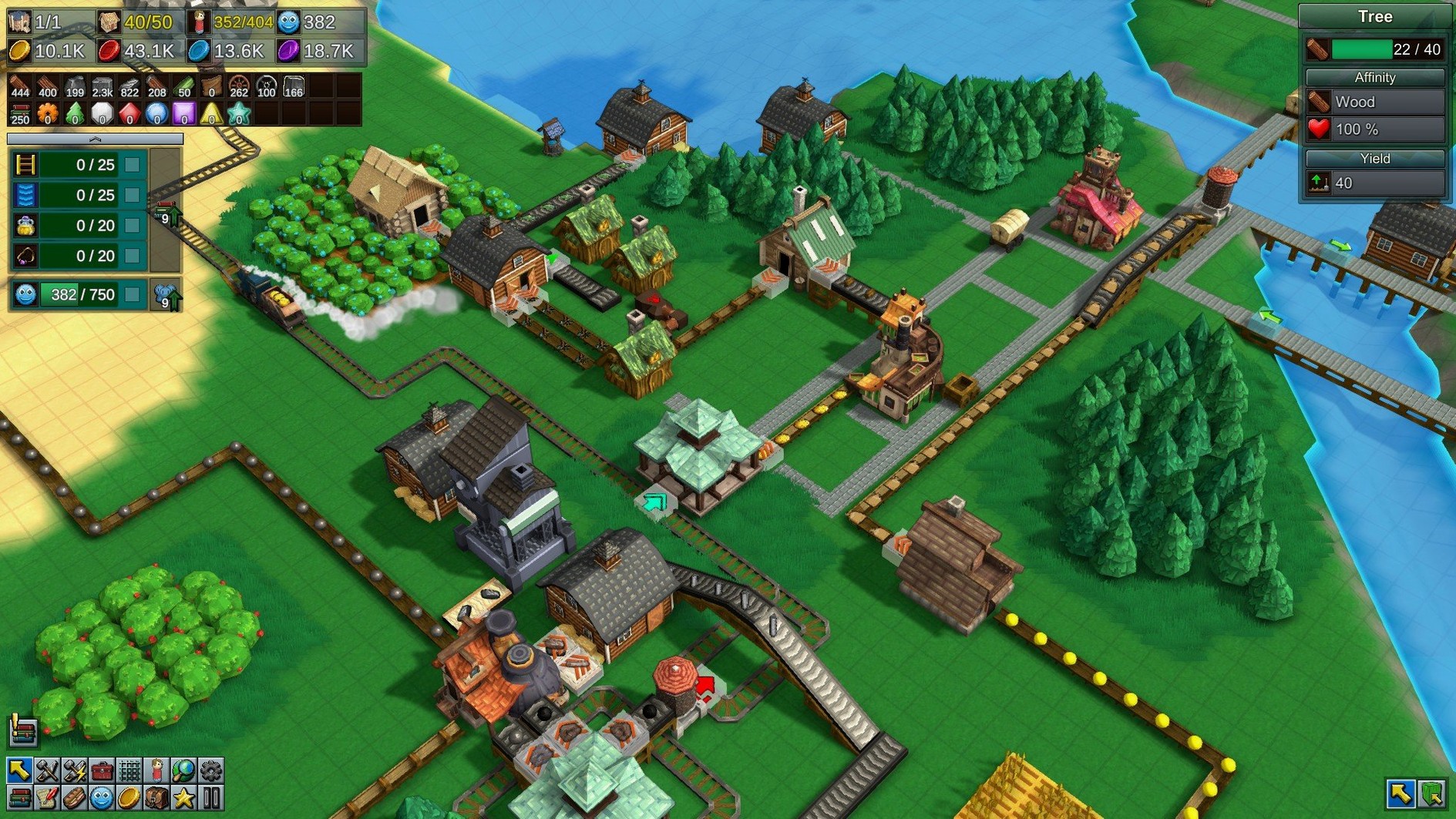
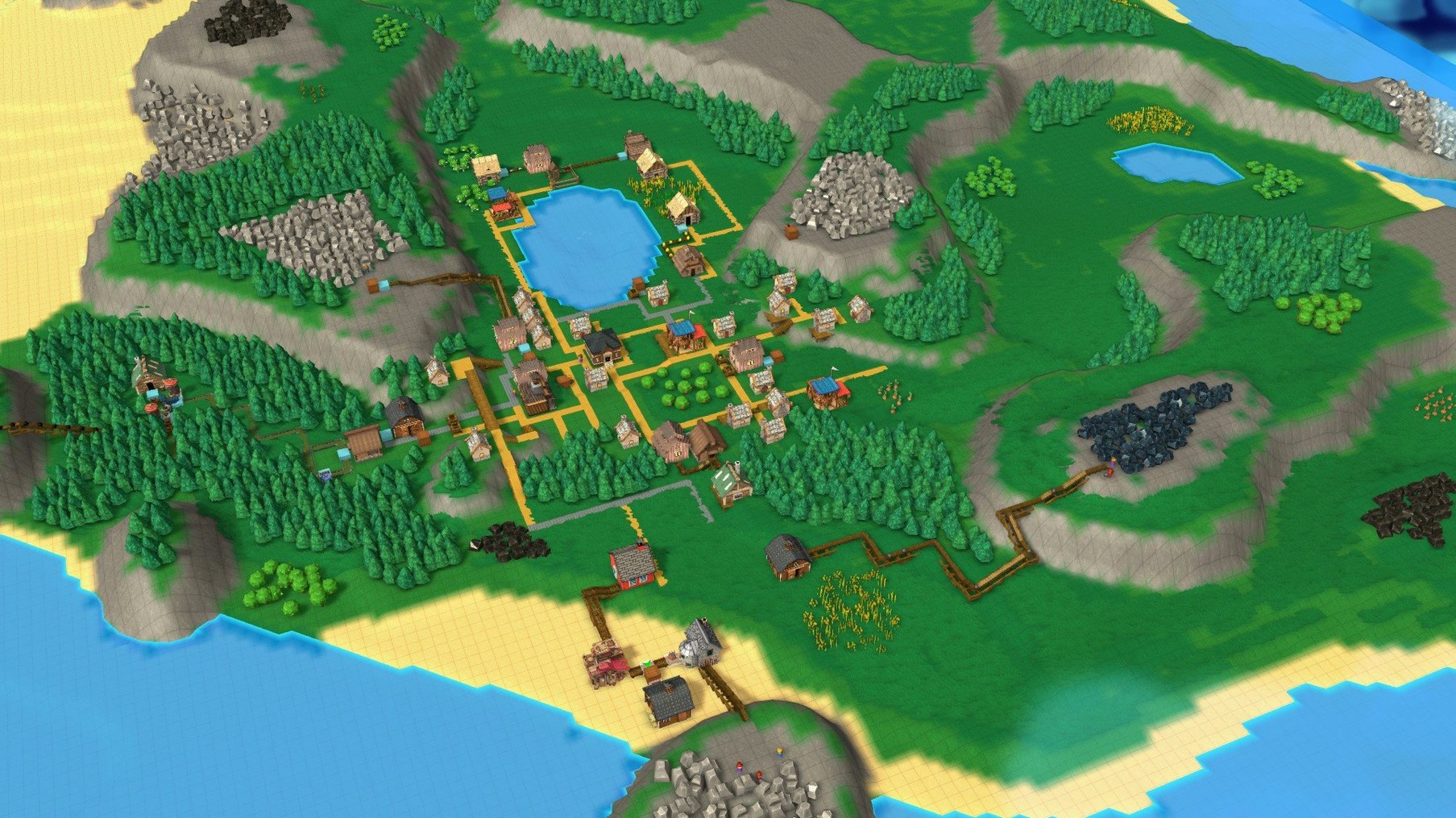
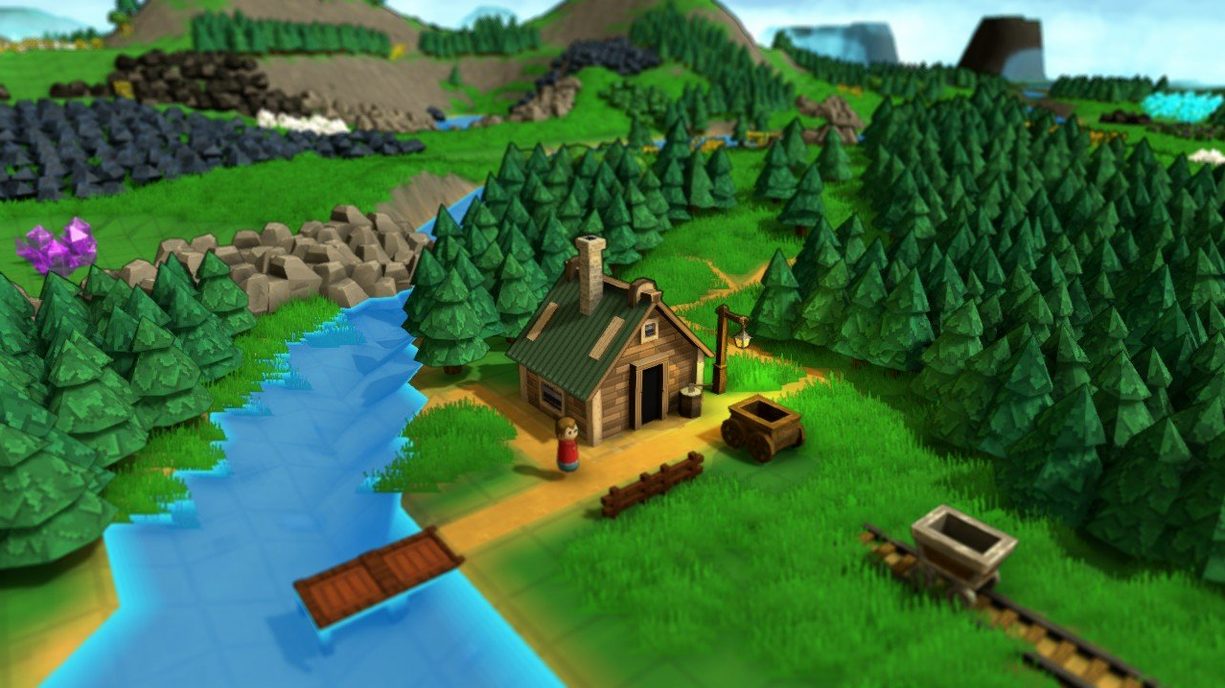
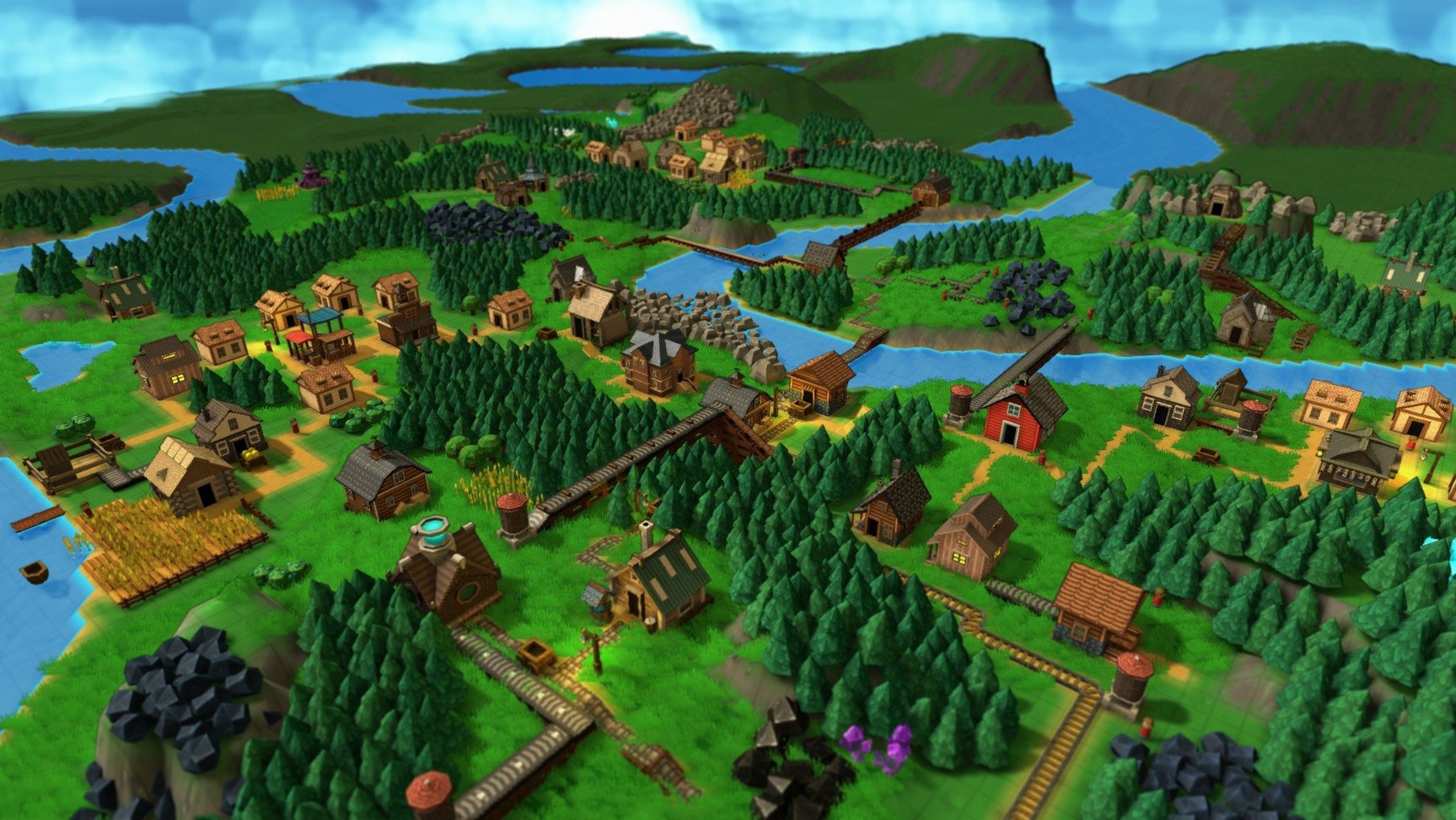
Starting with an empty patch of land and no infrastructure is daunting. Factory Town hands you that exact problem, then slowly gives you the tools to turn barren terrain into a working settlement where resources flow on their own. The core loop isn't just placing buildings — it's about connecting them so wood, stone and processed goods move without constant babysitting.
Transport is where the game shows its depth. Goods can travel by rail across bridges and junctions, or along water routes once you unlock boats. Every belt, track and dock is yours to place, which means bottlenecks are yours to fix too. A recent update lets boats plot straight courses across open ocean, cutting down on zigzag paths that used to clog up late-game maps.
New technology unlocks gradually through research, giving you a reason to push production further. Airships, for instance, now pathfind more reliably, gliding over terrain that would stump a train line. Behind the scenes, the latest build reduced unnecessary physics calculations and transform updates, so the simulation stays smoother even when your town sprawls across half the map.
Creating a multifunctional city here means balancing housing, farming, factories and logistics — all from a single-player perspective. The interface itself got a tune-up too: the World Data panel no longer chokes on very large towns, making it easier to keep tabs on the big picture.
Factory Town sits somewhere between Factorio and Timberborn, borrowing the automation brain of the first and the cosy settlement feel of the second. Factorio pushes you toward scale and defence — endless conveyor belts, ever-larger smelting arrays, biters chewing at your walls. Factory Town dials back the threat and lets you focus on clever logistics without combat pressure. You still chase efficiency, but the mood is lighter.
Timberborn shares the village-building DNA, yet its verticality and water physics dominate every decision. Here the challenge is horizontal: sprawling rail networks, bridge placement, and ocean routes that boats now sail in straight lines. If you enjoy Factorio's interconnected systems but want a slower pace, or if Timberborn feels too constrained by river flow, Factory Town lands neatly in the gap.
Two tweaks make early towns less frustrating. First, open the audio panel and check the sliders — a now-fixed bug used to reset them to zero, and it's worth confirming your mix sounds right before you sink hours in. Second, adjust the camera speed and edge-scroll sensitivity. The default can feel sluggish once your settlement stretches across several screens.
When you unlock railways, turn on the snap-to-grid option for track placement. It keeps junctions clean and prevents the odd angled rail that wagons struggle to navigate. Late-game players with sprawling coastal towns should also toggle the ocean route overlay after researching boats — straight paths across water cut transport time noticeably. One more thing: the World Data panel stays responsive now, but on truly massive maps you'll still benefit from closing it when you don't need live stats.
Good to know: copied barns used to arrive with max capacity while still showing upgrade buttons — that quirk got patched in this build, so duplicate freely.
You can move resources using conveyor belts, railways that span bridges and junctions, and water routes where boats now navigate straight across the ocean.













Chat 0
Hop in or make an account to join the chat.
Quiet in here so far. If you have used this build, tell me what the install actually did.