
 Football Manager 2026
 Farming Simulator 25
 Farm Together 2
 Factory Town
 Factorio
 Frostpunk 2
 Frostpunk
 Fabled Lands

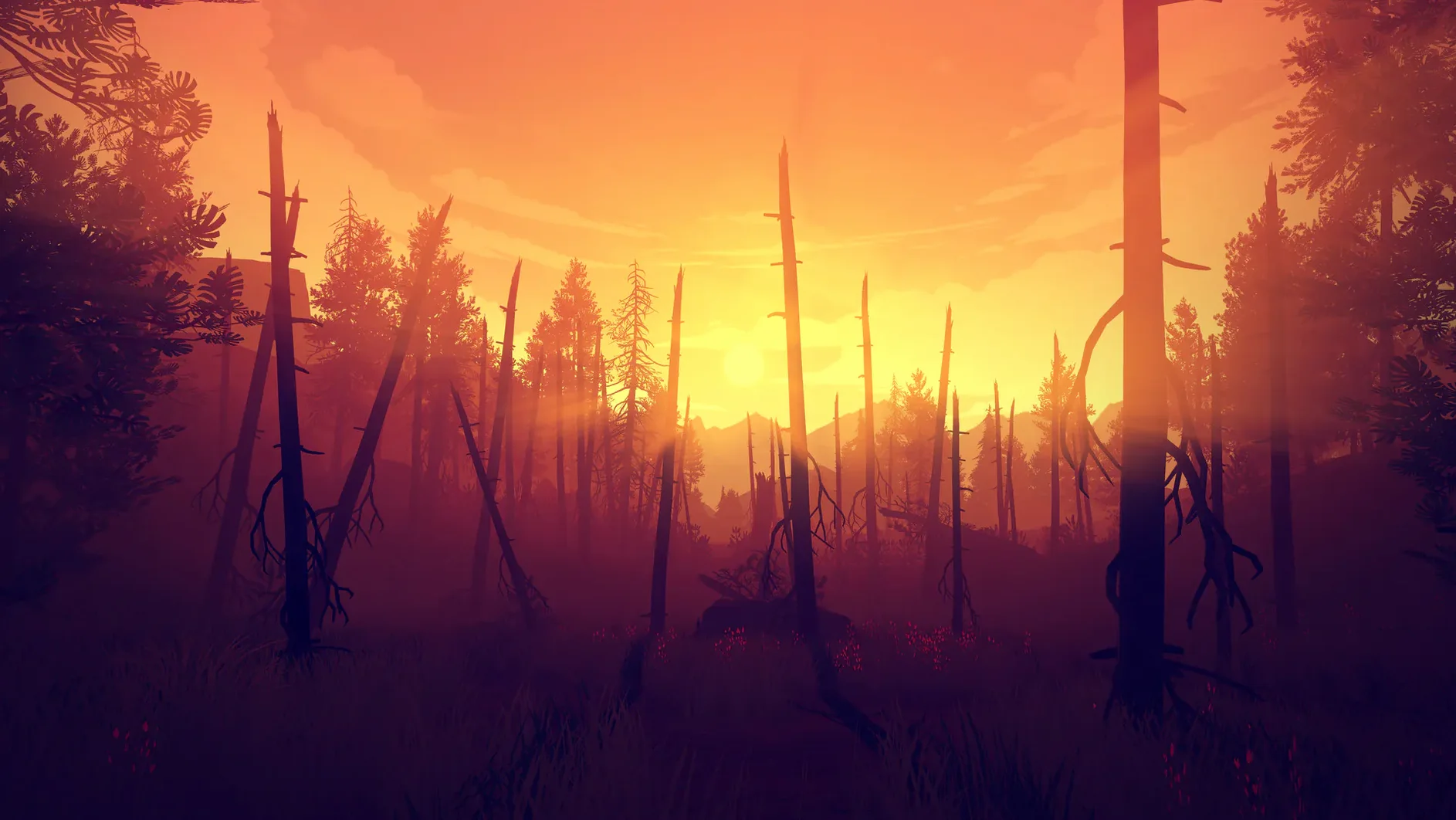
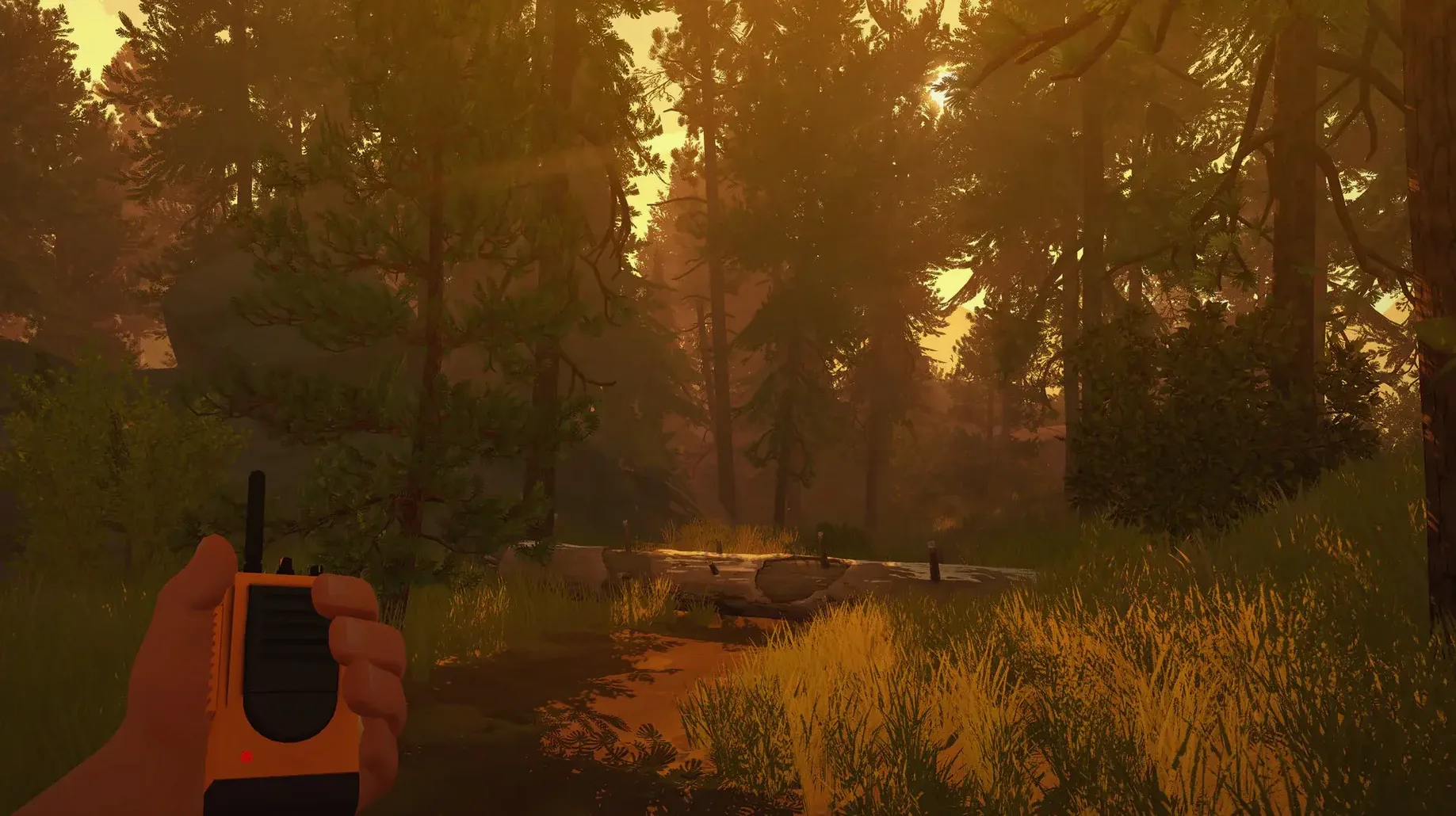
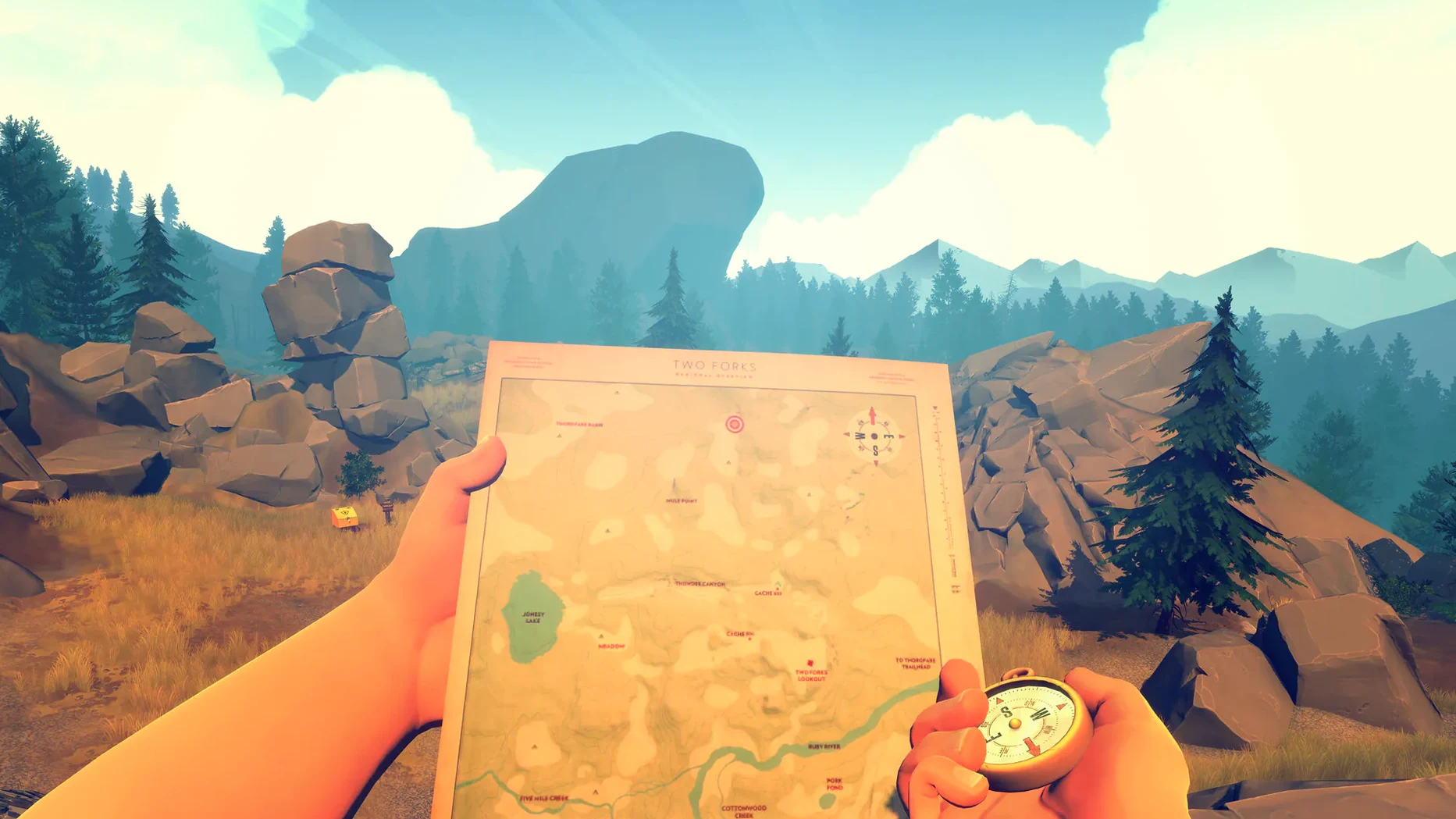
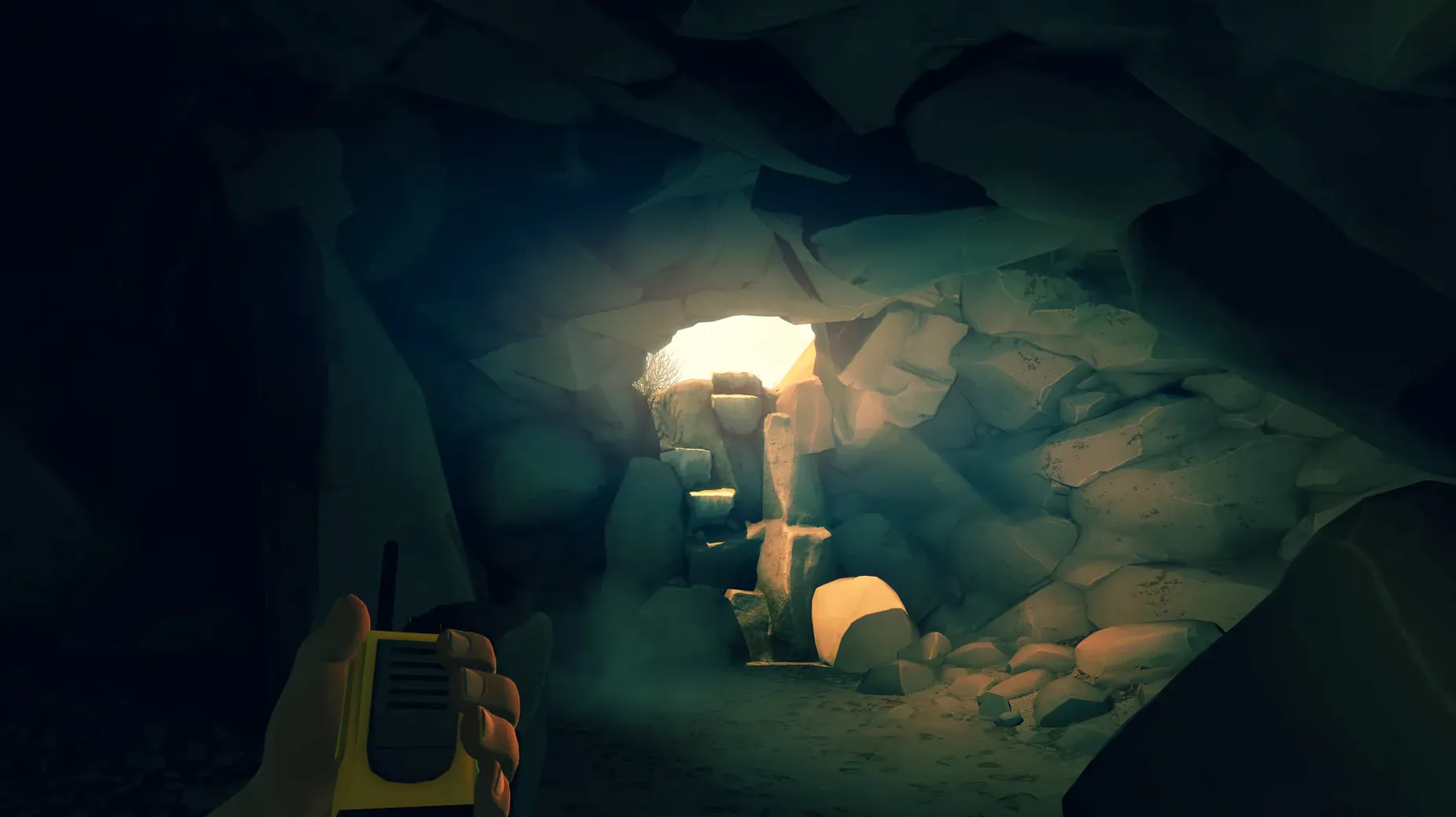
At a glance
The game opens with a quiet shift that goes sideways. A strange signal pulls Henry from his post and into the forest, and from there the story unspools across a single season. You talk with your supervisor Delilah over a handheld radio, make choices that shape the conversation, and search for clues in a landscape that feels both empty and watched. There are no skill trees or combat systems. It is a walking, talking, listening kind of game, built around a map you carry in your hand.
Most curiosity lands on the radio. The handheld unit is your only tether to Delilah, and players want to know whether the game forces them into endless dialogue trees. It does not. You pick a response when the prompt appears, stay silent when you prefer, or open the radio yourself when you spot something worth reporting. The story bends around those choices, but it never stops to wait for a decision.
Another common question is about the map. You carry a physical-looking topo map that marks trails, creeks, and landmarks — no glowing waypoints. A compass is clipped to the top. You read it yourself, which sounds fiddly but quickly becomes second nature. Getting lost is part of the design, not a bug.
Some Mac players ask about the Intel-only build. The game uses x86 64-bit code, so Apple Silicon machines run it under Rosetta 2. On an M1 Air, the forest stays smooth and the fan stays quiet. The stylised colours do the heavy lifting rather than raw texture detail, so older Intel Macs handle it well too.
People also wonder about length. A first playthrough lands around four to five hours. There is no collect-a-thon padding, no side quest log — just one story from spring to autumn, told in one go.
What Remains of Edith Finch shares the first-person narrative spirit and the walking-pace rhythm, but it unfolds as a series of short, self-contained vignettes inside one house. Firewatch stays with one man in one forest, and the relationship with Delilah is the engine rather than a family mystery. If Edith Finch feels like a short story collection, Firewatch reads more like a novella with static on the line.
Gone Home also drops you into a single location with no combat, but it is an indoor exploration game built around reading notes and examining objects. Firewatch pushes you outside into open trails and a day–night cycle. The sense of scale is different — Gone Home is a house; Firewatch is a national park. Both trust you to piece the story together, but Firewatch gives you a voice on the other end of the radio.
The Long Dark shares the wilderness and the first-person view, yet it is a survival sim with hunger, cold, and wolves. Firewatch borrows none of that tension. The stakes are emotional, not physical. If you want a game where you pause to admire a sunset without checking your calorie count, Firewatch is the closer fit.
Radio prompts not appearing. This is usually a matter of positioning. The prompt triggers when you are near a point of interest and facing roughly the right direction. Move around the object or area slowly — often a few steps to the left is all it takes. If Delilah just spoke, wait for her to finish. The game queues dialogue and will not stack prompts on top of each other.
Frame stutter on Intel Macs. Some older machines hitch when the game loads a new area of the forest. Drop the draw distance setting one notch before touching anything else. The visual difference is subtle, and the smoothness gain is immediate. Also close background apps that lean on the CPU — the game wants as much of that Intel chip as it can get.
Getting turned around on the map. The compass points north, but trails fork without signs. If you lose your bearings, climb to high ground and look for landmarks — the watchtower, a rocky outcrop, the line of the creek. The map marks all of these. Resist the urge to sprint downhill; that is how you end up two canyons off course.
Subtitles not matching the spoken English. The voice track runs in English only, and the subtitle translations prioritise meaning over word-for-word accuracy. That is intentional. A Russian or French line may condense the original dialogue, but it carries the same intent. No setting changes this — it is how Campo Santo localised the script.
Good to know: if you ever lose the map object in your inventory, press the map key — it is not something you can permanently drop. The game knows you would be hopeless without it.
The voice language is English, and the game includes localised subtitles in Russian, French, German, Spanish, Simplified Chinese and Japanese.
Campo Santo developed the game, and it was first released on 9 February 2016.
It is a first-person mystery where you play Henry, a fire lookout in the Wyoming wilderness drawn into the forest by something strange.










Chat 0
Hop in or make an account to join the chat.
Quiet in here so far. If you have used this build, tell me what the install actually did.