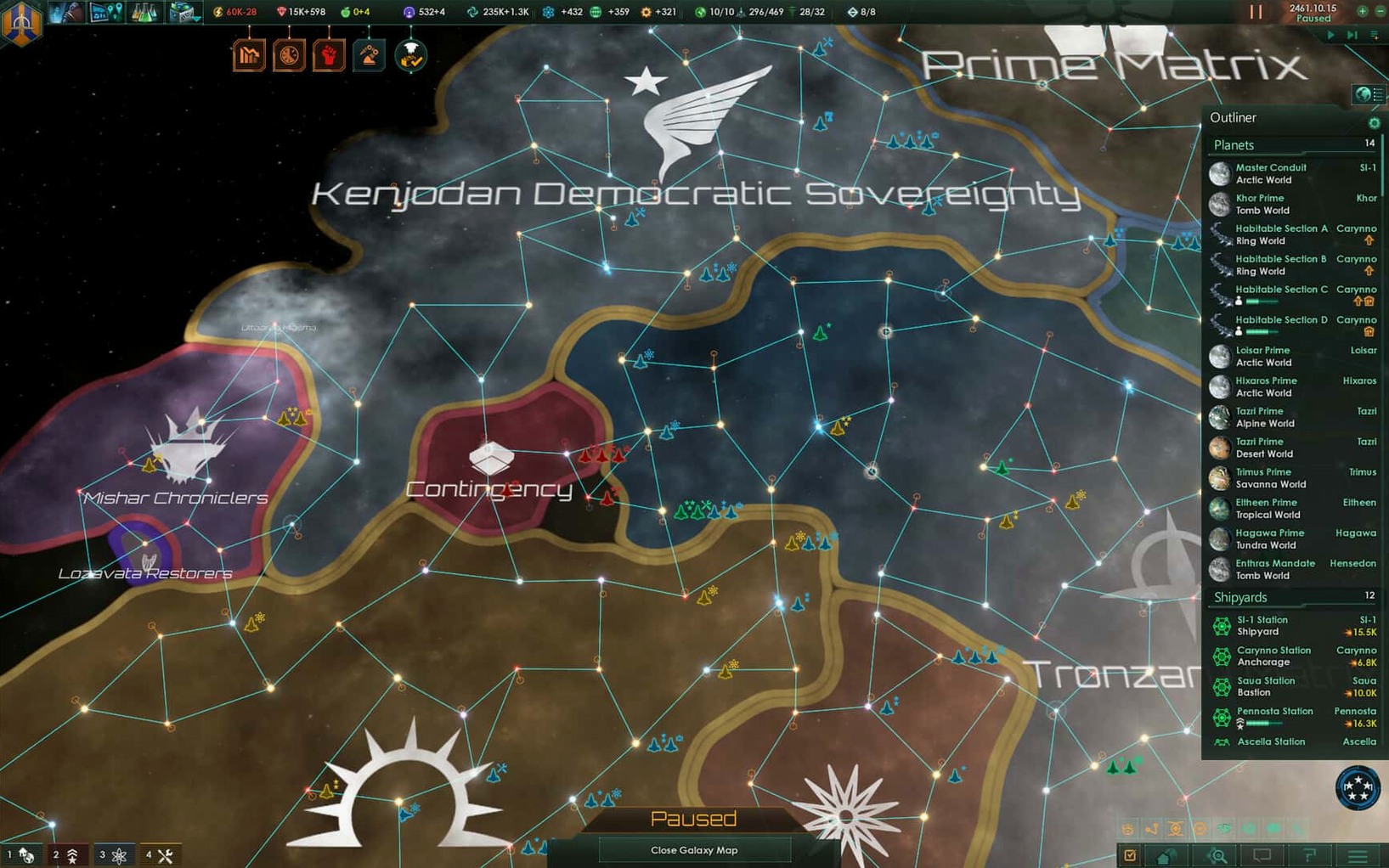
9 May 2016. That's when Paradox released Stellaris, and nearly a decade later, its clock still ticks in real time in the upper corner of the screen. You pause, issue orders, then watch days and years roll by as your science ships chart a map dense with nebulae, ancient ruins and hostile space life. It's a grand strategy game dressed as a 4X, and the joy comes from the stories your empire generates — not from winning quickly.
World-building marathons and internal politics
- Patient world-builders. You'll spend hours naming colonies, designing ship classes and role-playing a xenophile democracy.
- Players who enjoy internal pressure. As your society grows, faction demands and resource shortages create conflicts no fleet can solve.
- Exploration fans. Sending colonizers to take samples and scan anomalies scratches the itch of discovering a living galaxy.
Real-time decades and spreadsheet diplomacy
- Real-time pace. Even on the fastest setting, a full campaign runs dozens of hours. It rewards patience, not quick reflexes.
- Diplomacy and spreadsheets. Managing budget allocation and diplomatic relations is a core loop. If you prefer tactical battles, this leans heavier on menus.
- Complexity curve. The interface gives you Russian, English, German, Spanish, Simplified Chinese, Polish, Portuguese and French text — but the systems underneath take time to read.
Paused mid-survey, a galaxy waiting
You launch the game and the main menu fades into a starfield backed by music. Loading your save, the galaxy map opens exactly where you left it — three science vessels paused mid-survey, a construction ship waiting near a mineral-rich asteroid, and a diplomatic alert blinking from the neighbouring empire that just closed its borders. The clock sits at 2278.04.12, frozen until you tap the spacebar.
First move: unpause and let a month tick by. The top bar shows energy credits dipping slightly, minerals holding steady. A pop-up announces the completion of a research project — your physics team has unlocked blue lasers, and the society department finished mapping the genetic traits of a pre-sentient species on the outer rim.
You order your home starbase to queue two new corvettes, then switch to the expansion planner. Three worlds within your borders show green habitability ratings. You pick the ocean world with a +15% energy modifier, drag a colony ship onto the build order, and assign a governor from the leader pool — a level-two bureaucrat with the "Architectural Sense" trait that cuts district costs.
An anomaly pings near the galactic core. Your nearest science ship reroutes, and the lead scientist's archaeology skill triggers a multi-stage dig. The clock reads 2279.01.09. You save manually, lean back, and let the next year unfold under your watch.
Workflow: managing a two-front war
War declarations arrive without ceremony. In this scenario, a militarist neighbour to the galactic north claims three of your border systems, while a rival federation to the east seizes the opportunity to push into your vassal's territory. You have fifteen minutes to stabilise before the situation spirals.
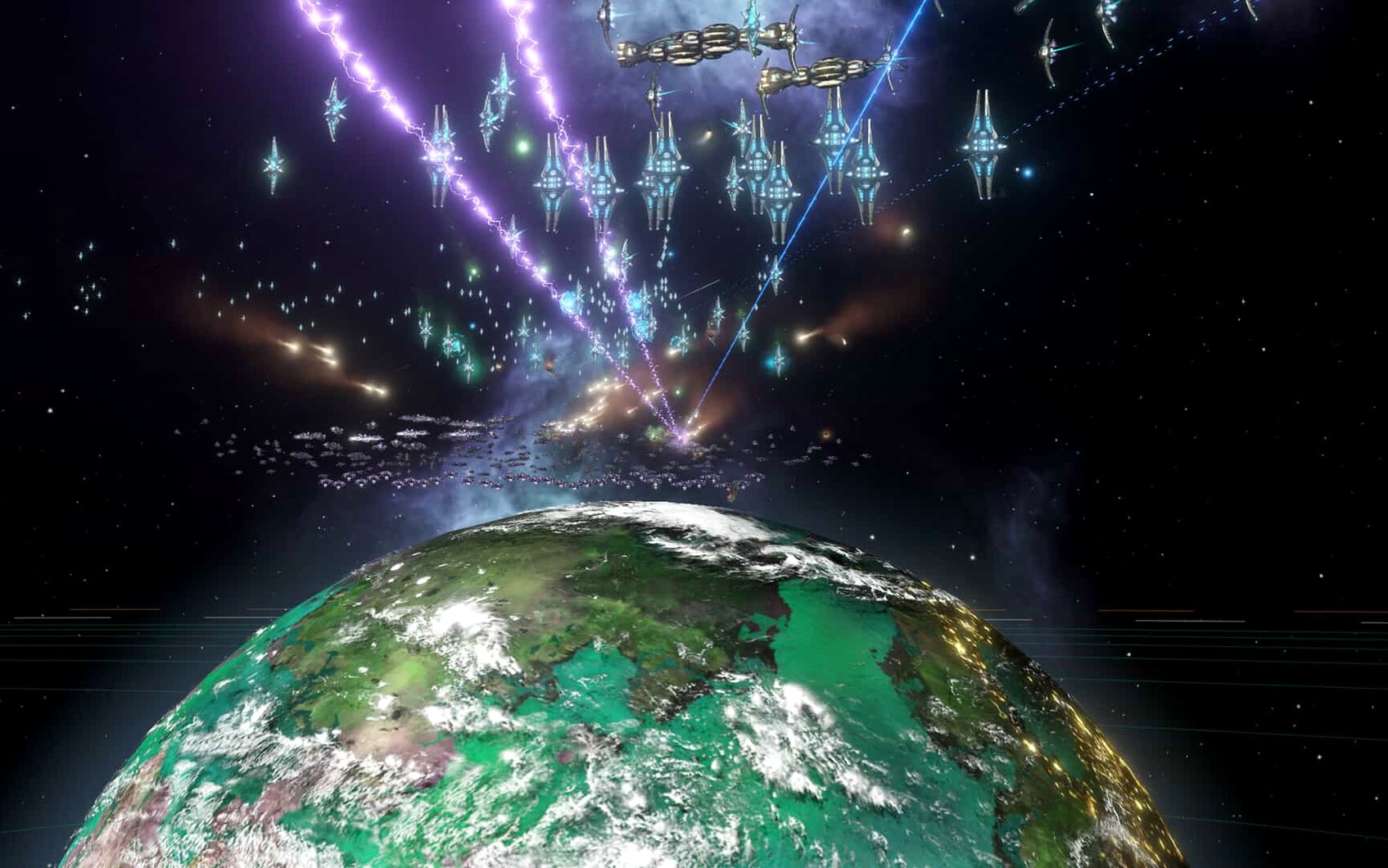
- Pause and assess. Open the fleet manager. Your main battle group — 28 corvettes, 12 destroyers, 4 cruisers — sits at 89% strength. The northern front needs it immediately. The eastern flank has a defensive starbase with two ion cannons but no mobile fleet.
- Split and reinforce. Detach six destroyers from the main fleet and order them to the eastern chokepoint. Queue replacements for both groups at your shipyard worlds. The alloy stockpile looks healthy at 8.2K; you can sustain losses for a while.
- Diplomacy check. Open the contacts screen. A friendly megacorporation owes you a favour from a past trade deal. You call it in — they agree to guarantee your independence, which deters a third empire from joining the dogpile.
- War goals set. Against the northern aggressor, you claim three systems and set the war goal to humiliate. For the eastern federation, you only want a status quo — holding the line at the chokepoint will force white peace after war exhaustion climbs.
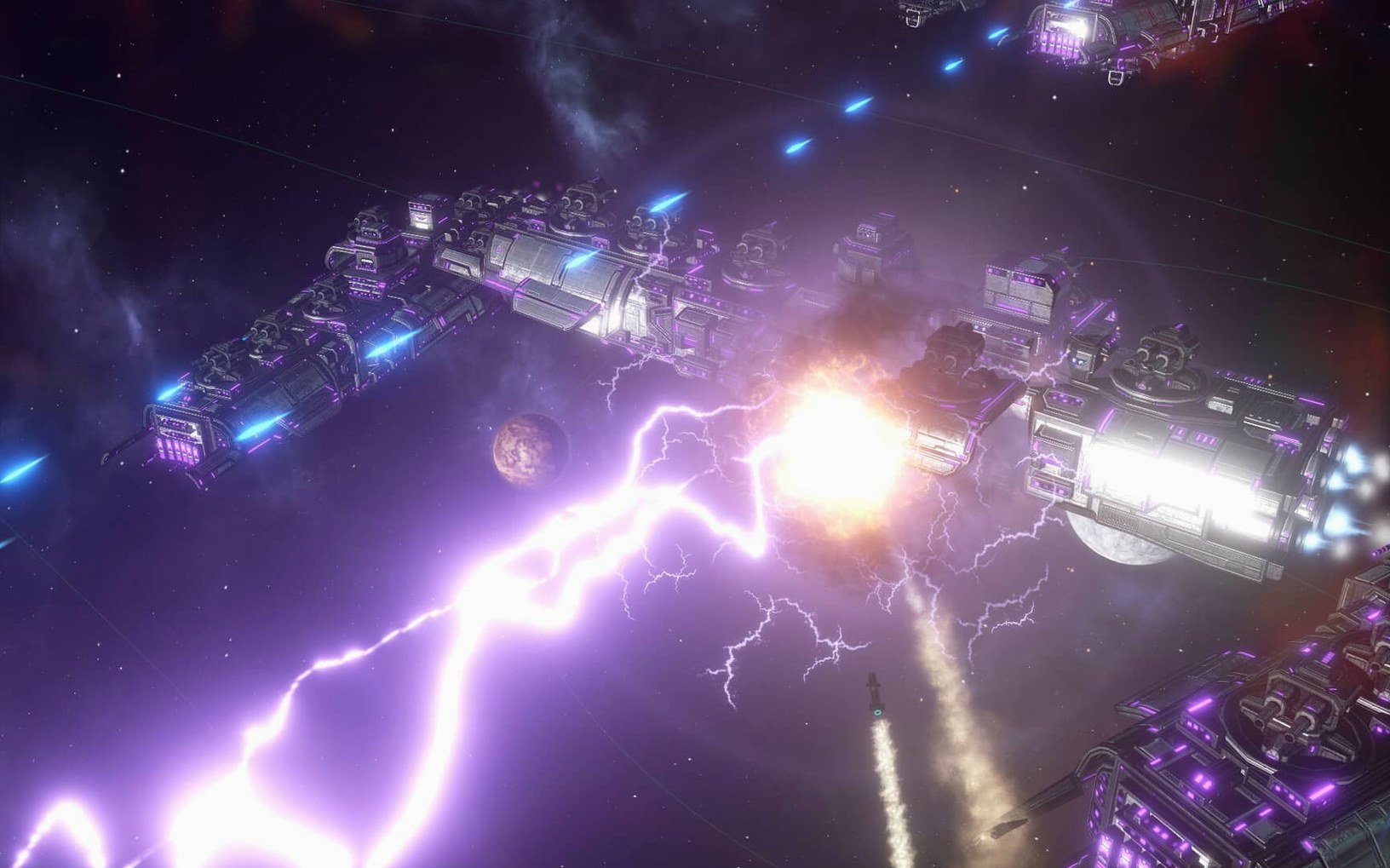
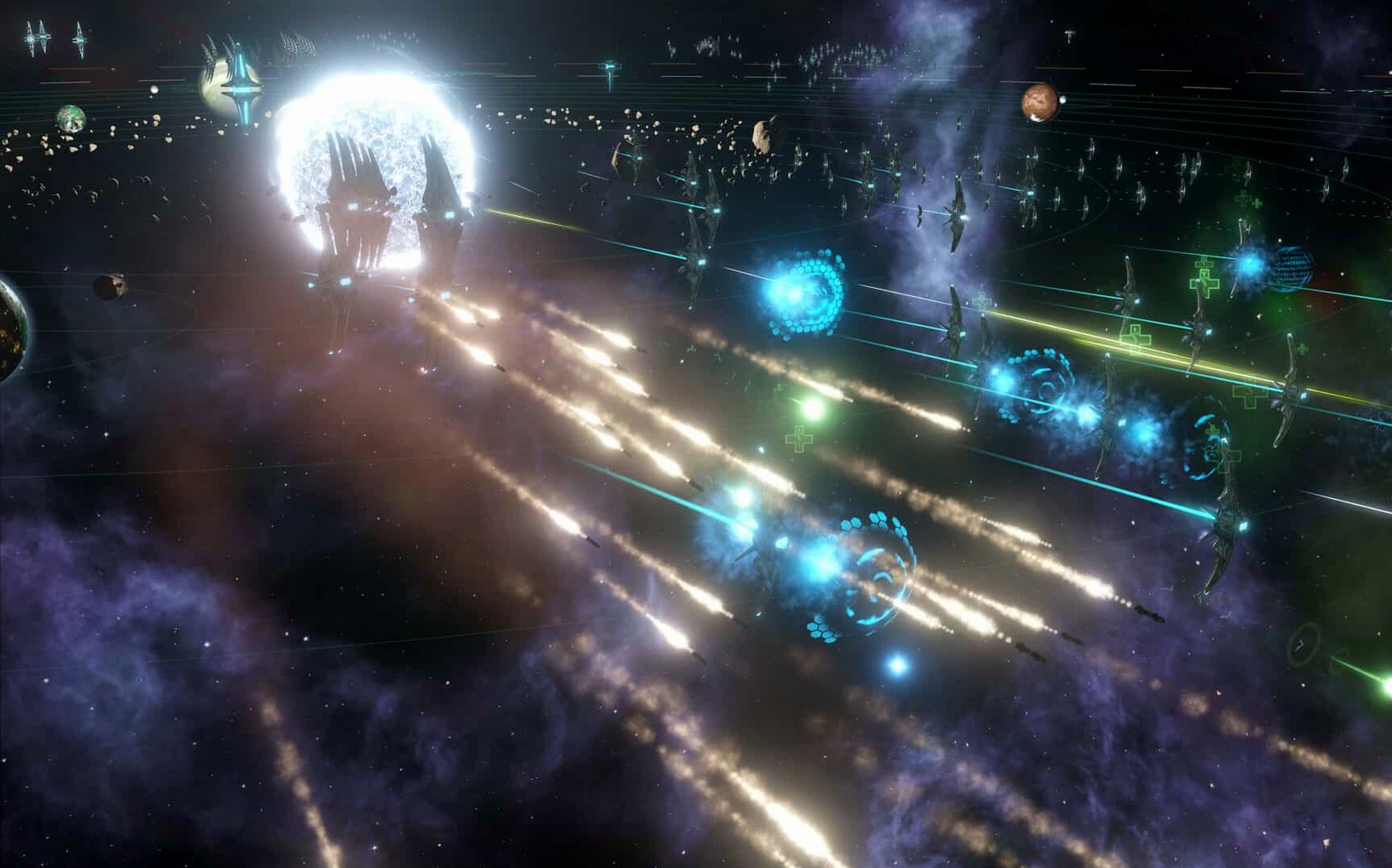
- Engage and micro. Unpause. The northern fleet jumps into the first contested system. You watch the battle unfold in the system viewer, pausing to order damaged corvettes to retreat individually. The Stellaris torrent of incoming data — hit chances, shield regen, disengagement timers — fills the combat log, but you only need to watch the fleet power numbers and the admiral's traits.
- Cleanup. After 90 in-game days, the northern fleet wins two decisive engagements. The eastern starbase holds, destroyed but replaced mid-war by a construction ship you had on standby. War exhaustion on both sides hits 100%, and peace offers arrive within the hour.
Tooltip readers and grand strategy veterans
This is not a game for everyone, and that's by design. Here's who clicks with it fastest.
- Strategy veterans who read tooltips. If you've spent evenings in Crusader Kings or Europa Universalis, the interface feels familiar. You'll recognise the pause-and-plan rhythm, the nested menus, and the joy of a perfectly timed policy change. The stellaris 4.2.4 download crowd often overlaps with Paradox forum regulars who dissect patch notes line by line.
- Science fiction fans who build headcanon. The game shines when you treat each playthrough as a short story collection. You name your scientists, remember which admiral lost an arm to space amoebas, and write mental biographies for your empire's founding species. Stellaris gives you the scaffolding; your imagination fills the rooms.
- Solo players with calendar gaps. Multiplayer is there, but the DRM-free build on this page suits the single-player experience best. A campaign easily stretches across weekends. You play while a podcast runs, or with the in-game music-only audio letting you supply your own ambient tracks. The stellaris mac torrent searches often come from people who want exactly that — a deep, offline strategy game that respects long

 Stoneshard
 STORROR Parkour Pro
 Stardew Valley
 Supermarket Simulator
 Spaceflight Simulator
 South Park: Snow Day!
 Soulstone Survivors
 Sons Of The Forest











Chat 0
Hop in or make an account to join the chat.
Quiet in here so far. If you have used this build, tell me what the install actually did.