
 Master of Piece
 Minecraft
 Mafia III
 LEGO® Bricktales
 No, I'm Not a Human
 No Man’s Sky
 Northgard
 KIBORG


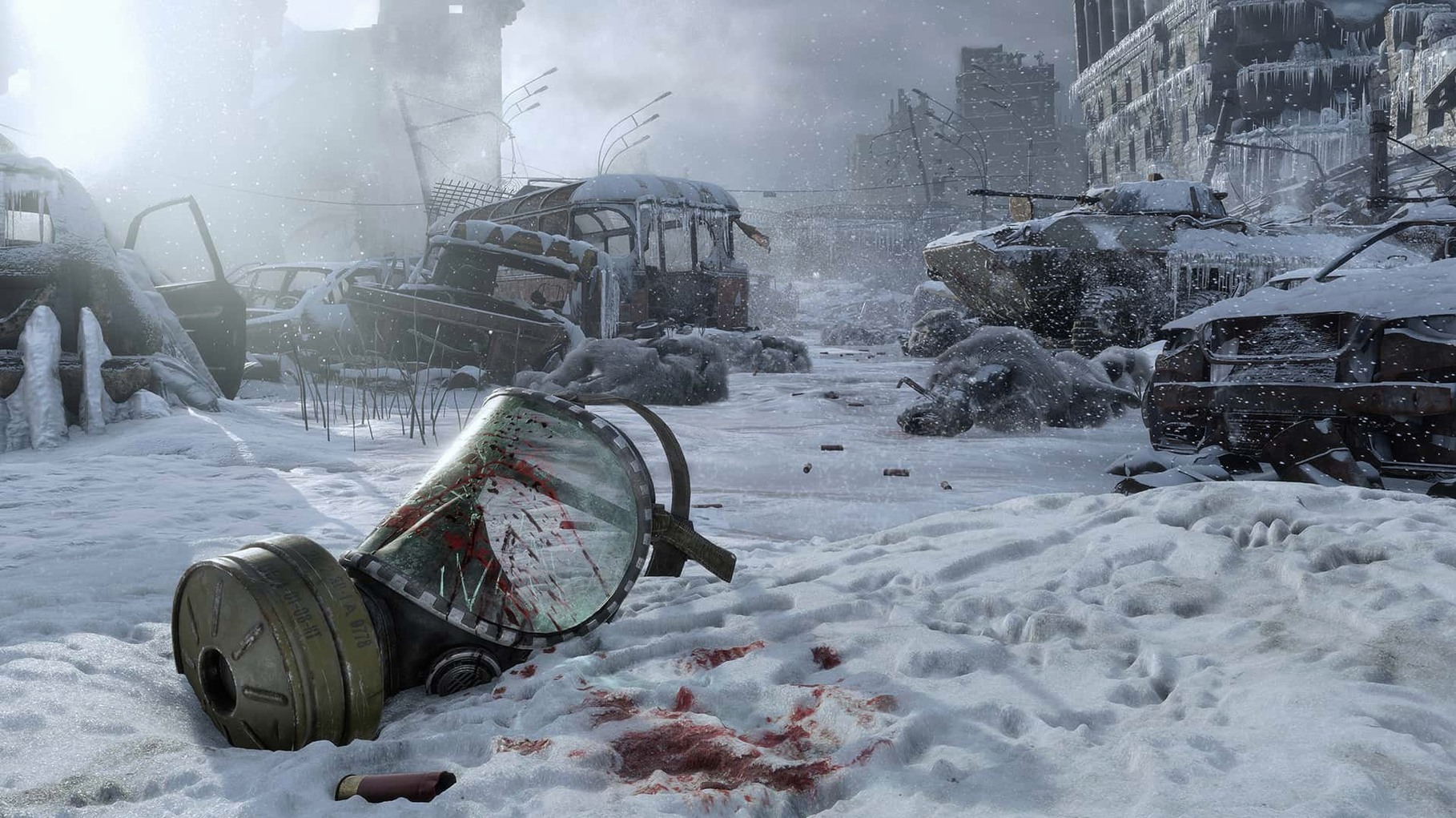
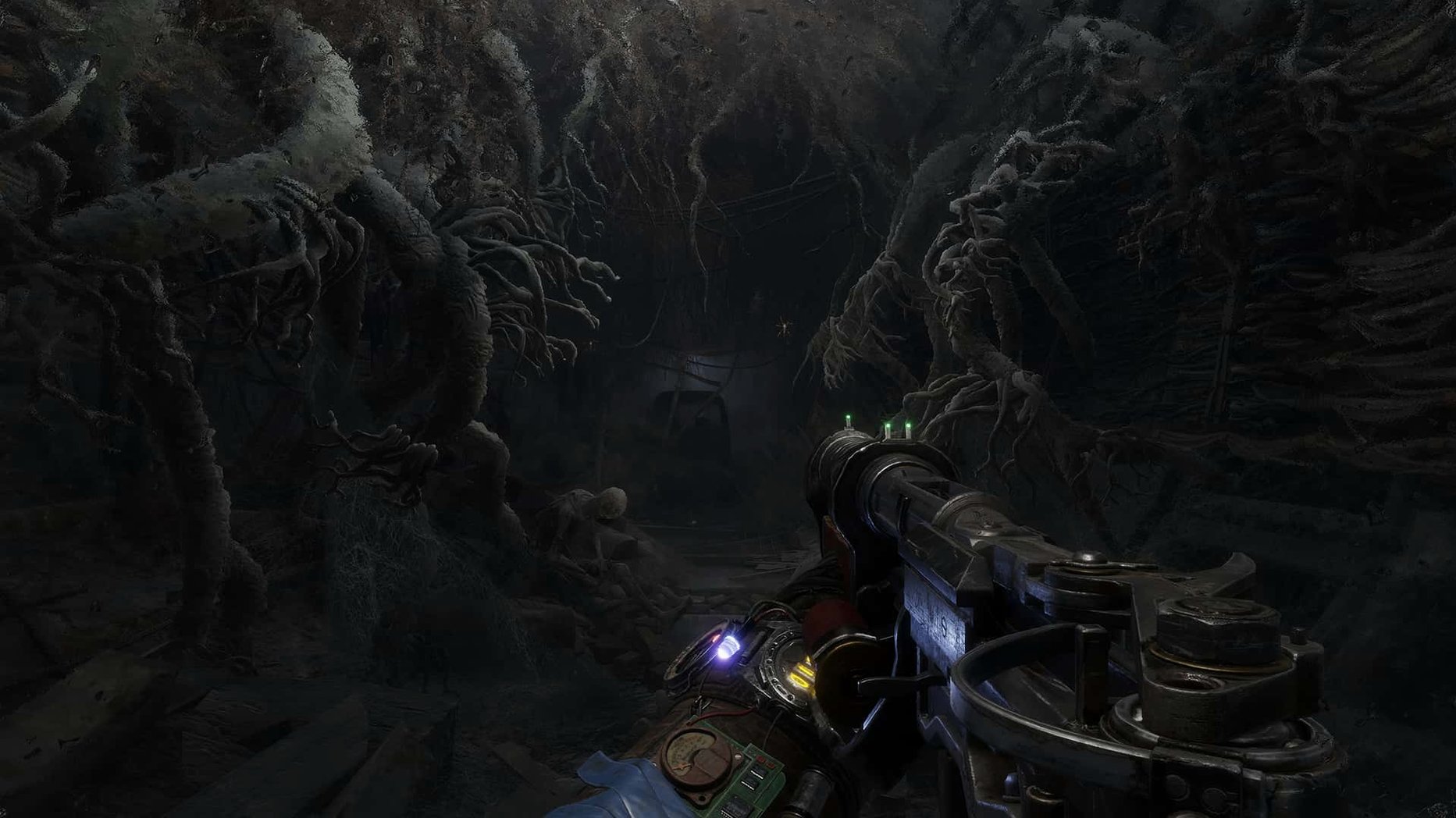
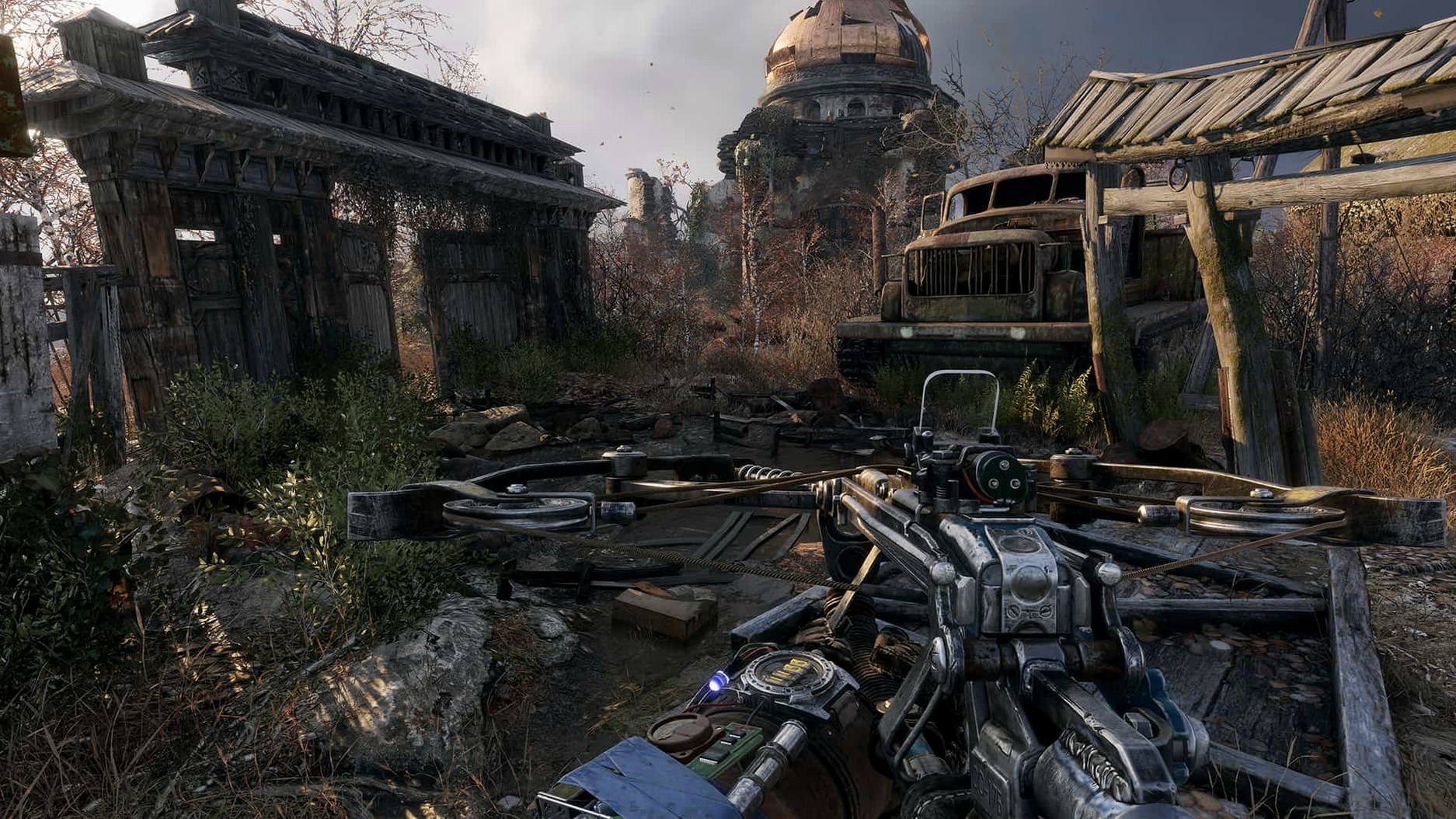
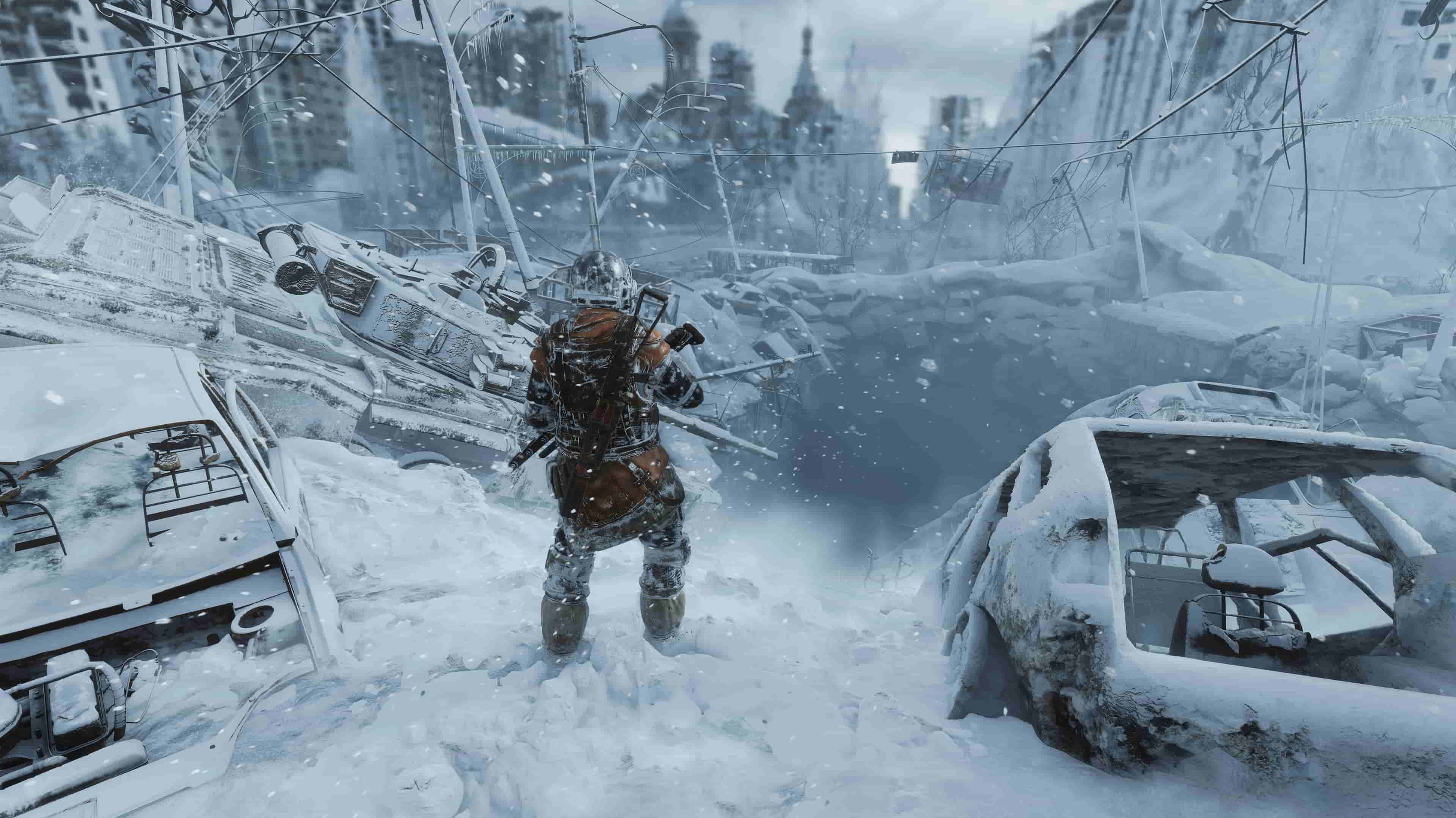
You step off the Aurora train into the frozen silence of the Volga. A makeshift rifle hangs at your side, its pressure gauge barely in the green. Somewhere beyond the marsh, a watchtower light blinks — and a mutant howl reminds you that ammo is scarce and the next safe house is a long crawl away. That's the rhythm of Metro Exodus: long stretches of quiet tension broken by sudden, desperate firefights.
| What it is | Key details |
|---|---|
| Genre | First-person shooter, survival horror |
| Setting | Russia, 2036 — 25 years after nuclear war |
| Structure | Large nonlinear levels connected by train journeys |
The game continues the Metro storyline, pulling from Dmitry Glukhovsky's novels but pushing beyond the tunnels. You craft medkits from scrap, swap scopes on a workbench, and decide how to handle the people you meet — choices that genuinely shift who stays at your side. Voice acting covers eight languages including Russian, English, German, and Japanese, so you can match the spoken words to the landscape.
Before you even shoulder a rusty Kalash, hop into the options screen. The defaults are fine, but a few tweaks make the wasteland more playable.
Say you arrive at a Volga island camp held by a dozen armed men. Your goal is simple: clear it quietly so a trapped engineer can slip out. Here is a workflow that keeps things quiet.
First, circle the perimeter at dusk. Note three things: watchtower guard patterns, a generator near the water, and a rusty truck that will mask footsteps. Throwing knives are your best friend here — silent and retrievable. Pick off the two isolated guards on the north side before anyone notices.
Next, crouch-walk to the generator and switch it off. Lights die across the camp; two more men split from the main group to investigate. Let them pass, then move toward the central shack where the engineer is held. Use a can lure to draw the door guard toward the truck. Once he turns his back, a quick takedown keeps the alarm cold.
Inside the shack, free the engineer with a held key press. The remaining bandits will eventually notice missing patrols and start searching — but by then you are already wading into the reeds with your charge, a suppressed revolver the only thing between you and a noisy exit.
It's 1 a.m. and the desert air hums with the whine of distant mutants. You have one gas mask filter left. The map shows a derelict radio tower two kilometres east, where a sniper rifle is supposedly stashed.
You start walking. The sand shifts underfoot; every dune crest reveals a new wreck — a rusted truck, a skeleton half-buried. Halfway there, a dust storm swallows the moonlight. The compass becomes your only guide. You hear them before you see them: humanoids scrambling low, their clicking calls bouncing off the rocks. Three rounds from your revolver put two down, but the third lunges and cracks your visor. Mask on. Filter ticking.
You reach the tower with forty seconds of clean air left. Climbing the ladder feels agonisingly slow — each rung groans — but at the top, a workbench and the rifle glint in lantern light. You swap filters, craft two more from scavenged parts, and perch by the broken window. Through the scope, the desert spreads out blue and silent. For ten minutes, nothing moves. Then the sun rises, and you head back to the Aurora with dust in your boots and a weapon that will change the next firefight.
Good to know: The Caspian's abandoned vehicles often hide crafting supplies inside cabins and boots — always check before moving on.
Yes, it's a complete native port built for macOS 10.15 and later, tested on Apple Silicon with macOS Sequoia.
Russian, English, German, Spanish, Italian, Ukrainian, French, and Japanese voice tracks are included.






Chat 0
Hop in or make an account to join the chat.
Quiet in here so far. If you have used this build, tell me what the install actually did.