
 iStat Menus
 Infuse Pro
 iMazing
 iZotope Ozone
 iExplorer
 Iconize


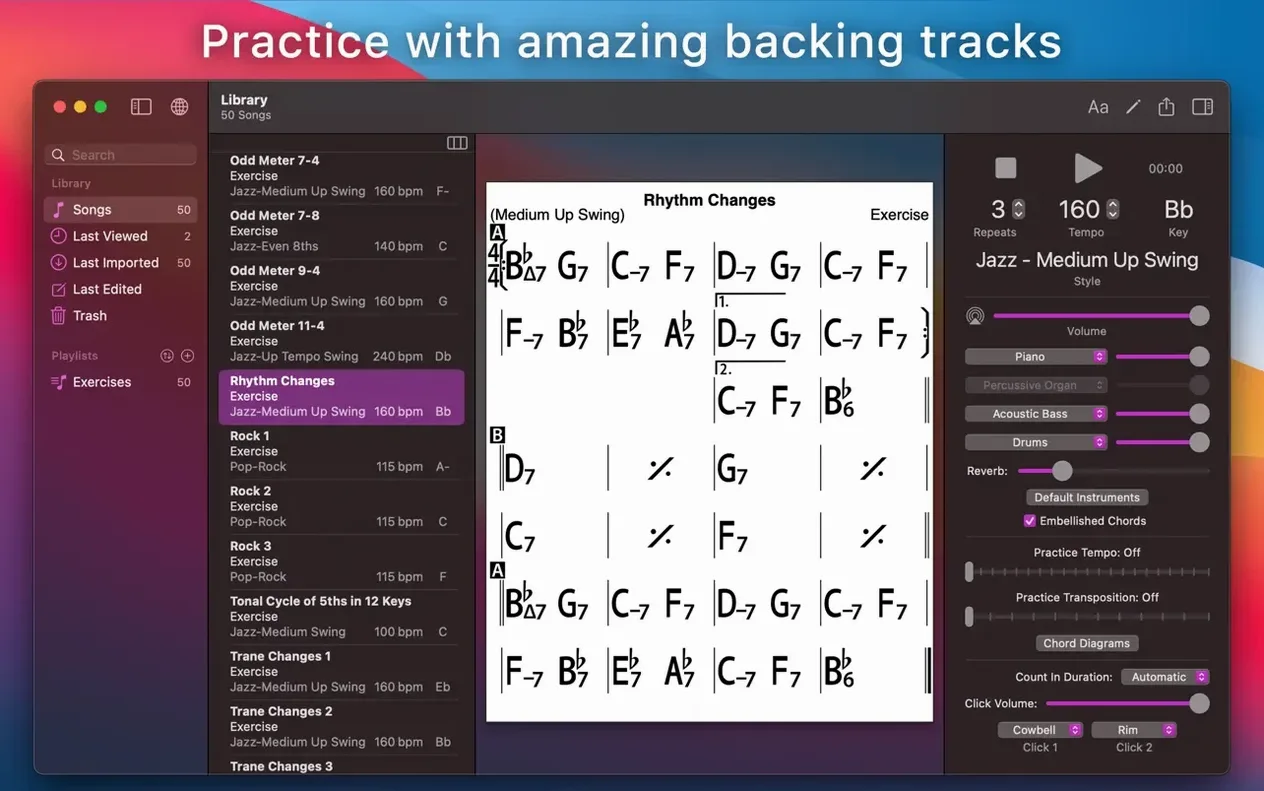
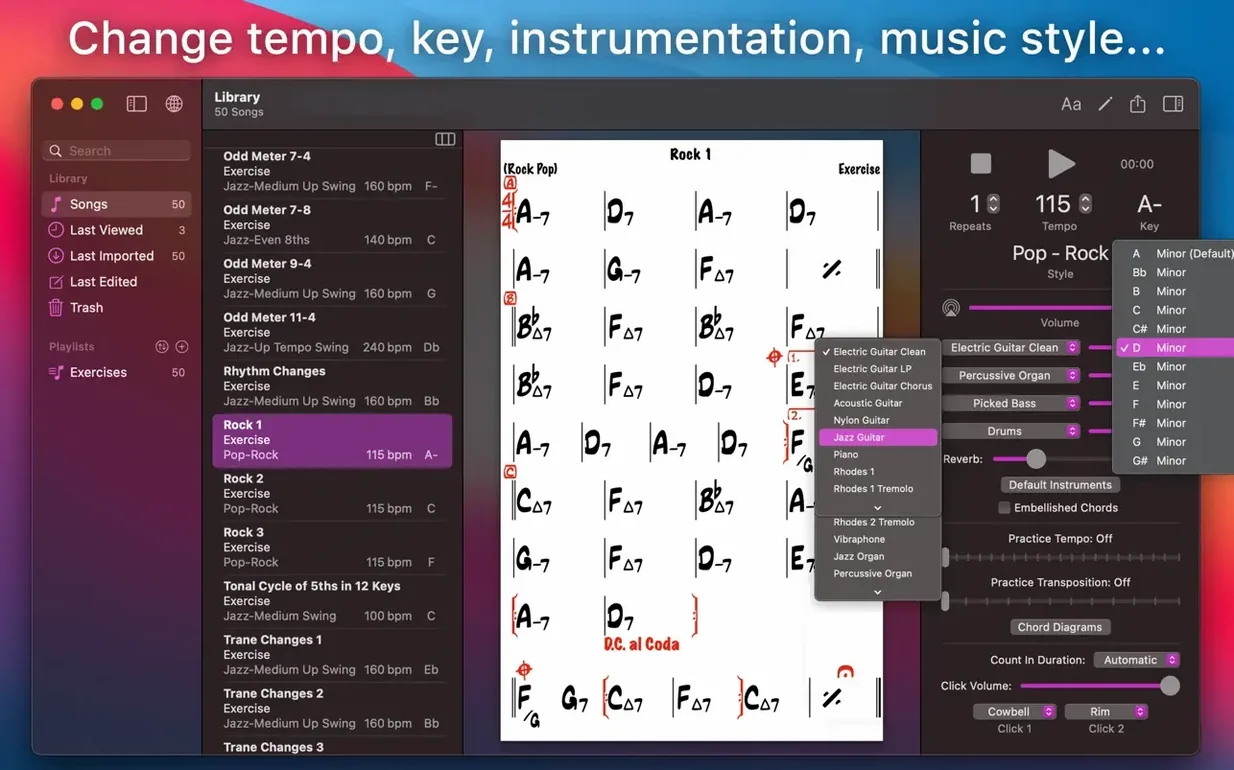
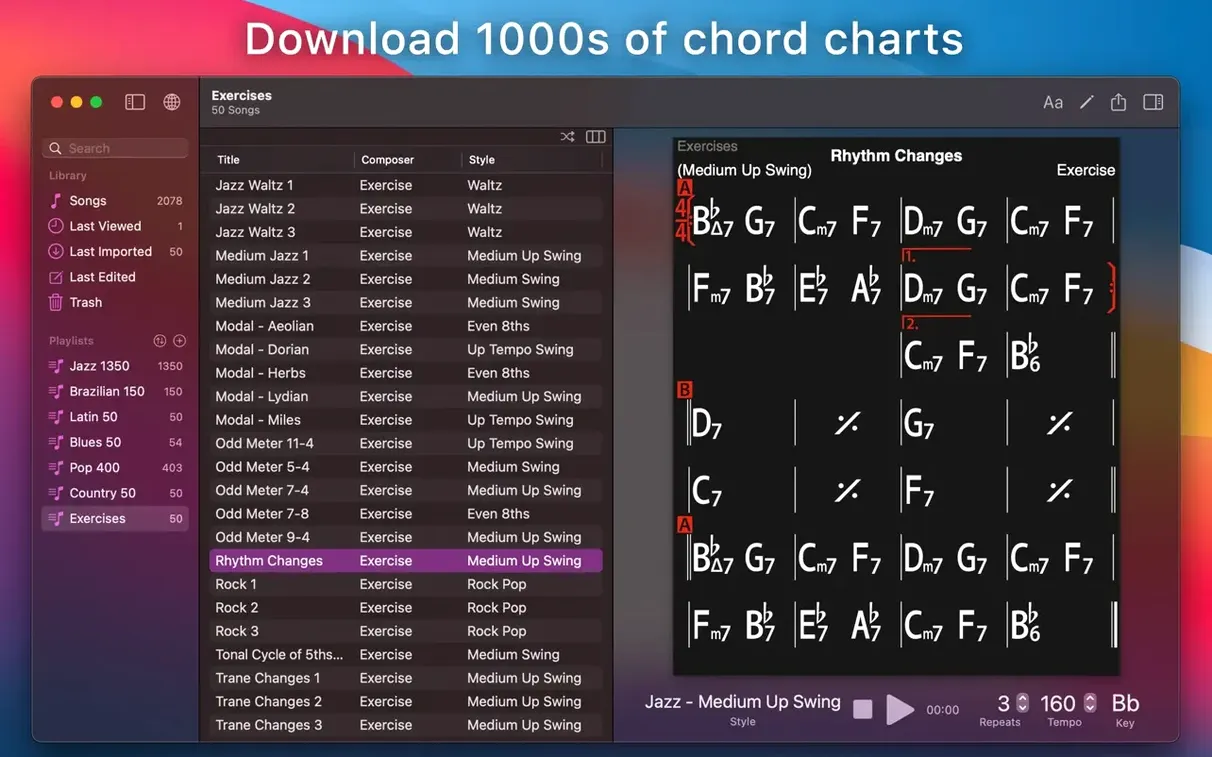
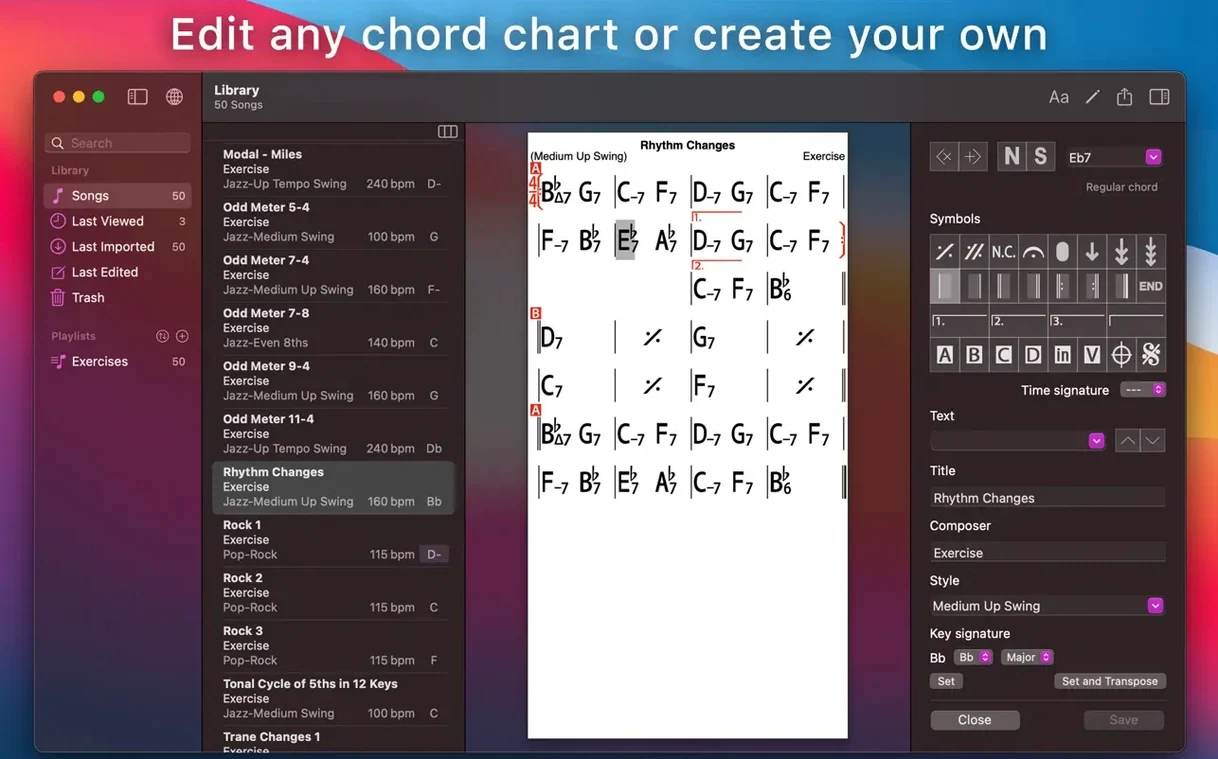
51 accompaniment styles. That is the band you get when you open iReal Pro. Tap in a chord chart—the kind you scribble on a napkin—and the app fills the room with piano, bass and drums that follow your changes.
Here is how it slots into a practice session:
Charts and playlists sync through iCloud, so the setlist you edit on stage lives on the Mac back home. The Mac app is a separate build from the phone version, which means the layout uses the extra screen space without feeling stretched.
A few defaults are worth changing straight away. Open preferences with ⌘, and head to the General tab. Switch Count-in from one bar to two if you like a longer runway before the band joins. Under Playback, bump Mix Balance a touch toward drums if you want the kick and snare to cut through more—handy for horn players who need a pocket to sit in.
One setting that surprises new users: Transposing instrument under Notation. If you play tenor sax or trumpet, set it to B♭ or E♭ and every chart on screen shifts to match your horn. No mental math mid-solo. While you are there, tick Show scale suggestions and a row of notes appears above each chord—useful when you are staring at an F♯m7♭5 and need a quick melodic handhold.
iReal Pro runs light on a Mac. On an M1 machine with eight other apps open, the mixer and playback engine sit at about three to four percent CPU. Memory use hovers around 180 MB even with a hundred charts loaded. The app launches cold in under two seconds, and the audio engine never stuttered across a week of daily practice sessions. No fan spin, no beachball.
Stability is a strong point. Exporting a fifteen-minute practice recording to WAV while transposing a chart and toggling between three playlists produced zero crashes. MIDI export lands cleanly in Logic and Ableton—tempo map intact, chords on separate tracks. One limitation worth knowing: the audio export bakes the mix balance you set; you cannot split drums, bass and piano to individual stems later. Plan your practice recordings accordingly.
xattr -cr /Applications/iReal\ Pro.app to strip the quarantine flag.Compared to Band-in-a-Box, iReal Pro is the quick sketch tool. Band-in-a-Box generates full arrangements with intros, endings and solo sections; iReal Pro sticks to looping chord charts with a trio. For a horn player woodshedding changes, iReal Pro feels faster—type a chart, pick a style, go. Band-in-a-Box rewards the patient arranger but asks more clicks to reach a playable backing track.
Next to SessionBand, the difference is sound quality versus flexibility. SessionBand uses real studio recordings sliced into loops—the piano and drums sound richer out of the box. But you are locked to the keys and tempos those loops were recorded in. iReal Pro transposes instantly and handles any tempo without artefacts, which matters more when a singer calls an unfamiliar key at a jam.
Chord ai takes the opposite approach: it listens to a recording and guesses the chords. Useful for transcribing, but it does not play anything back. iReal Pro is the playback tool; pairing the two covers both ends of the workflow—grab chords with Chord ai, then practise them with iReal Pro's band. Some musicians hunting for an iReal Pro torrent do exactly that: one app for ear work, one for rep work.
The built-in chord progression exercises cover fifty common patterns—ii-V-I, rhythm changes, blues forms in all twelve keys. Set the tempo slow, loop a single progression, and run scales over it for twenty minutes. The transposition stays locked until you change it, so the band moves with you key by key. No need to stop and retype a chart.
It exports chord charts as audio (WAV, AAC, MIDI) and PDF lead sheets, not traditional music notation scores.














Chat 0
Hop in or make an account to join the chat.
Quiet in here so far. If you have used this build, tell me what the install actually did.