
 Aiarty Image Enhancer
 Aiarty Video Enhancer
 Affinity Publisher
 AIMP
AIMP AirBuddy
 Affinity Photo
 Airflow
 Affinity Designer

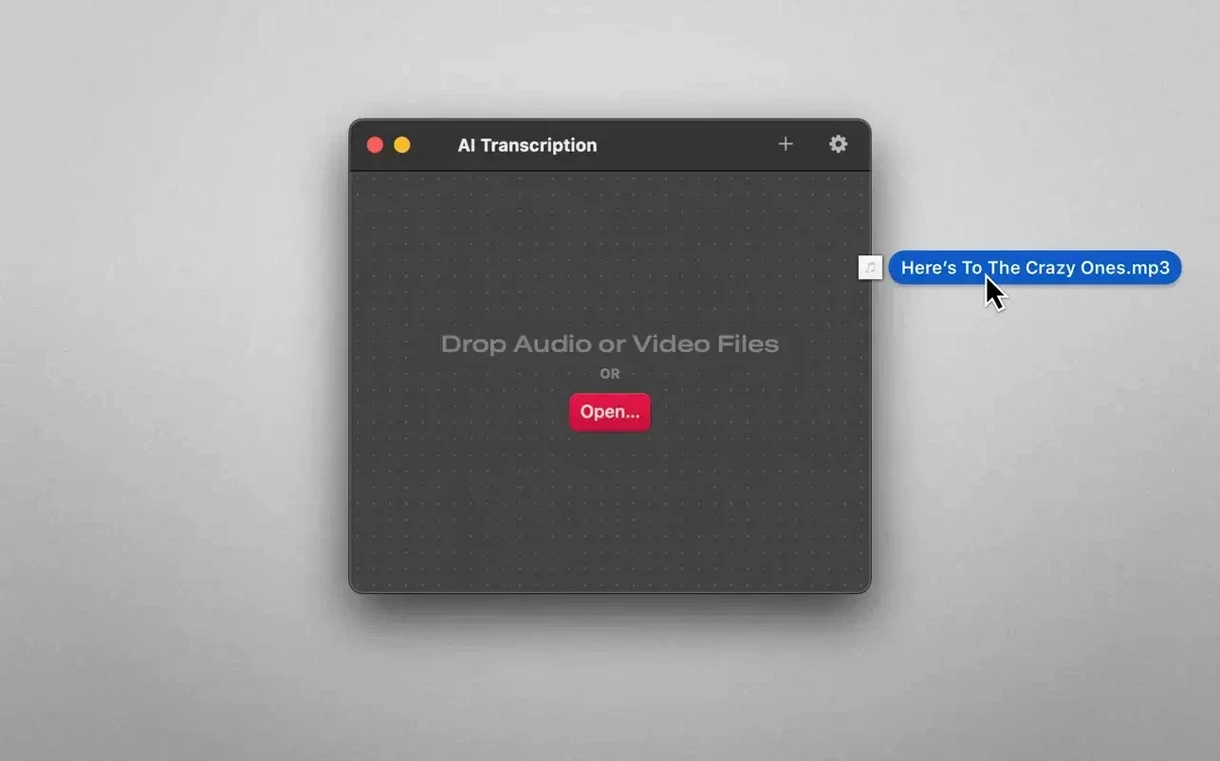
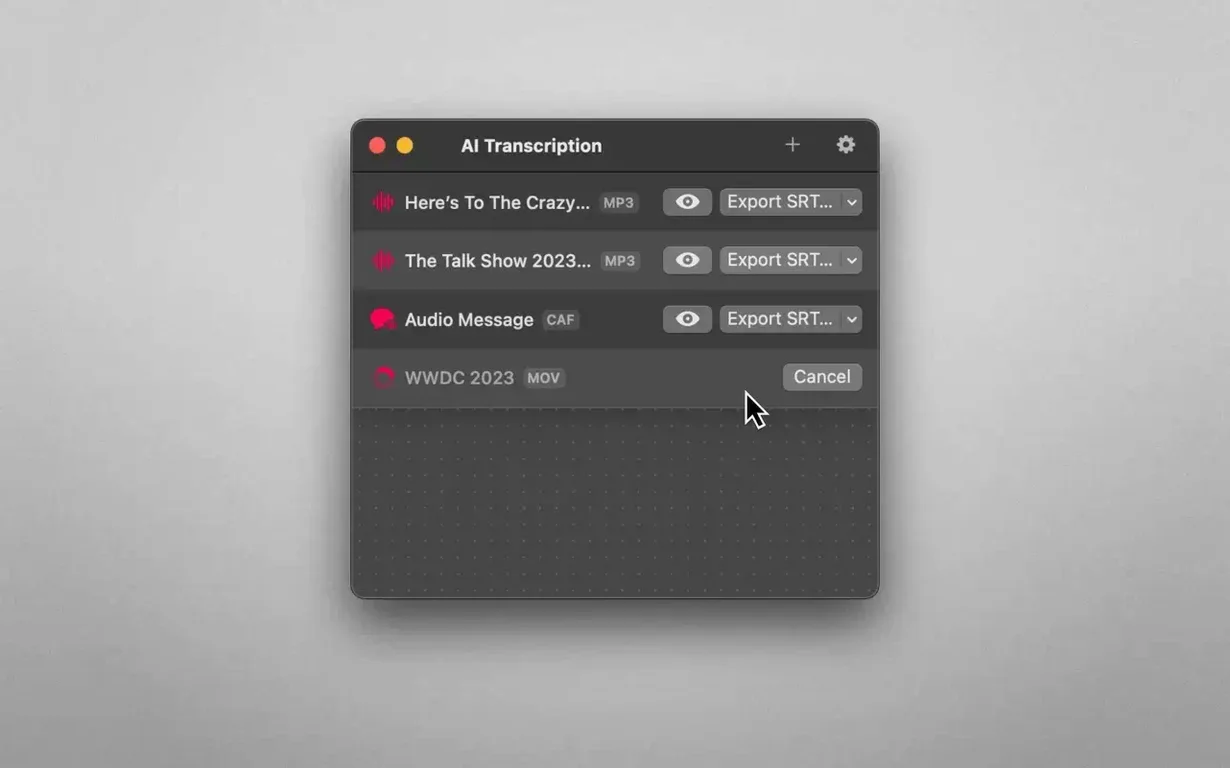
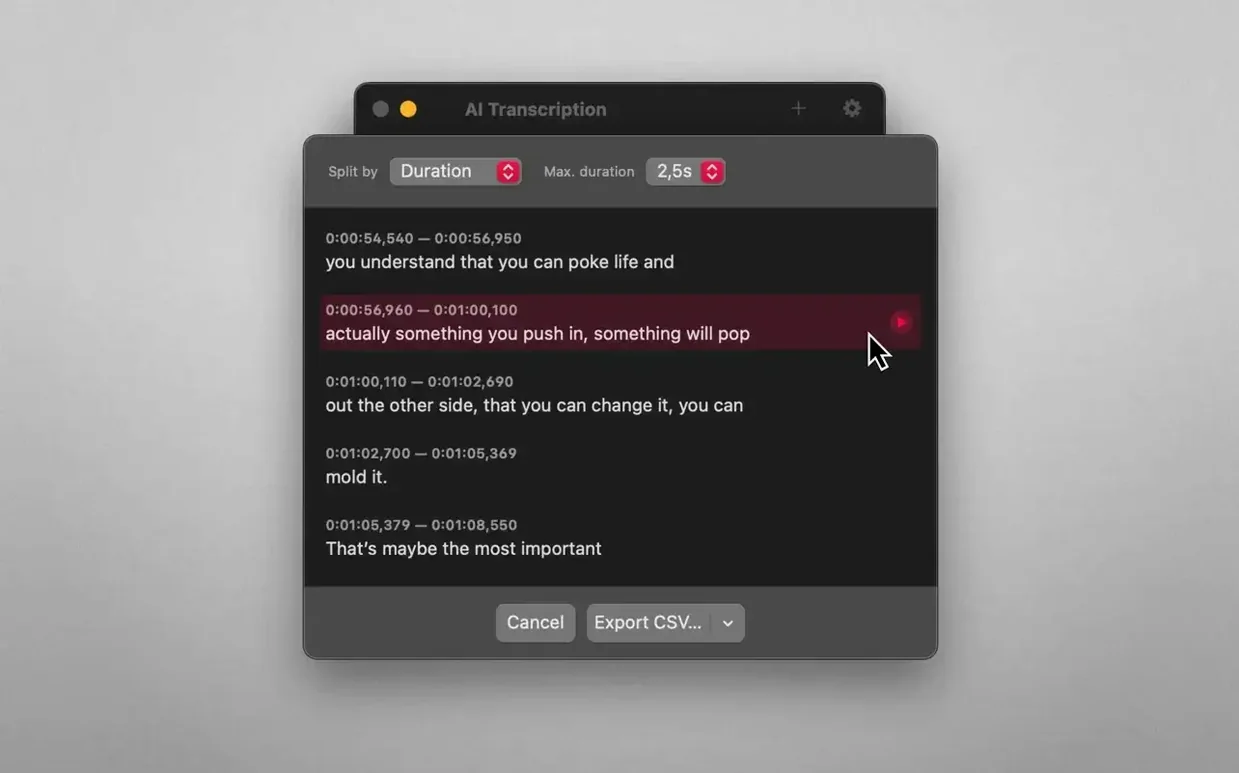
Up to 57 languages recognised, depending on the model you pick. The app processes files right on your Mac — nothing leaves the machine.
No. Transcription runs fully offline. You can work anywhere, even with Wi‑Fi switched off.
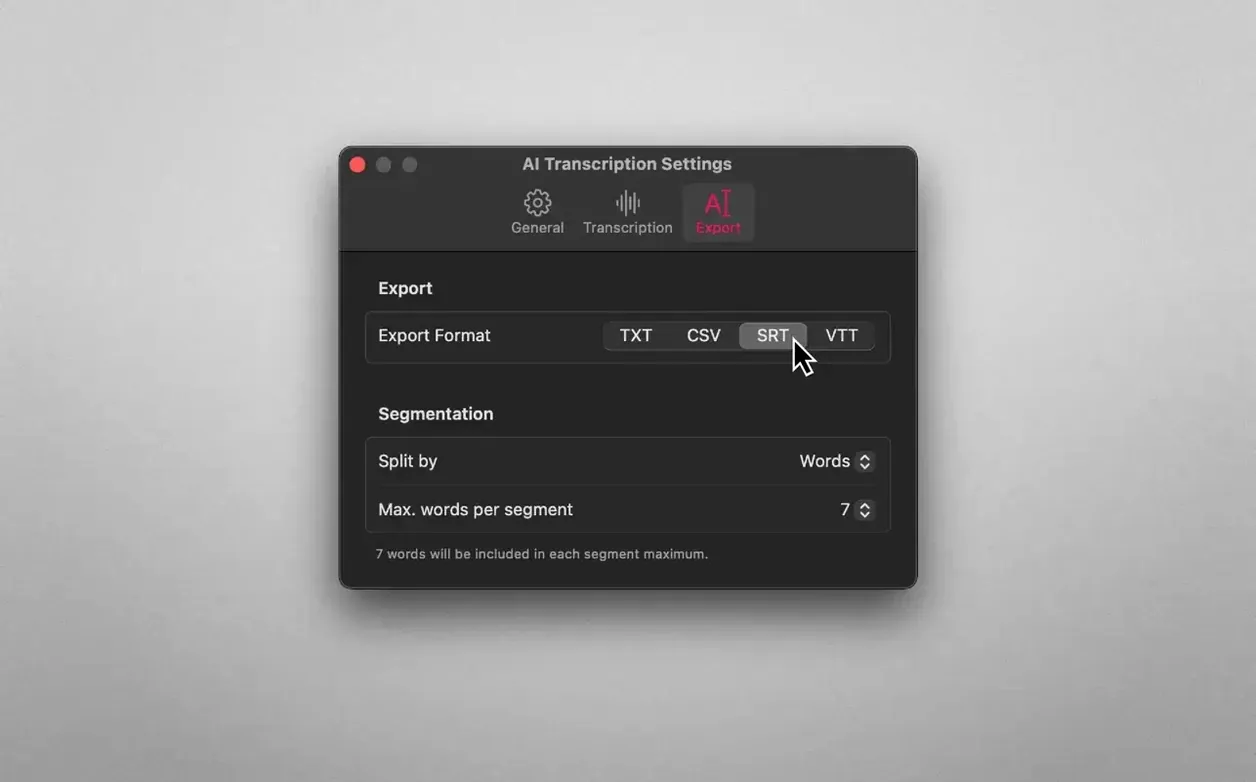
Plain text, CSV, SRT and WEBVTT. That covers everything from quick notes to subtitles ready for a video editor.
The jump from ai transcription 2.12 to 2.16 brought a few quality‑of‑life touches you notice within the first hour of use. The export panel now remembers your last format choice, so you are not clicking the same dropdown three times a day. Timestamp handling in SRT and WEBVTT exports got tighter — fewer misaligned cues when you drop the files into a video editor.
The ai transcription 2.13 and ai transcription 2.15 releases tidied up the Whisper model selector. Instead of a bare model name, you now see a short hint about speed versus accuracy, which helps when you are picking between tiny for a rough scan and medium for a polished transcript. Background thread behaviour also improved: the app no longer pins the CPU after a long file finishes, so the fan stays quiet.
If you last opened the app around ai transcription 2.10, the difference is more striking. The window used to reset its size after each job; now it keeps your layout. The language dropdown also gained a search field, which matters once you pass 30 supported languages and do not want to scroll through everything twice.
A few rough edges pop up regularly. Most have simple fixes.
AI Transcription is allowed. Then restart the app and try again.xattr -cr (with a trailing space), drag the app icon into the window, and press Enter. That clears the quarantine flag without touching your files.Drop a short voice memo in MP4 format first. Pick Apple Speech Recognition and note the speed. Then run the same file through Whisper tiny. The side‑by‑side comparison teaches you more about accuracy trade‑offs than any spec sheet, and it takes under three minutes.
Open Preferences on day one and tick Keep window on top. It sounds trivial, but when you are dragging files from Finder while reading a transcript, the window stays visible instead of hiding behind your browser.
Set a default export folder early. The app saves to the same directory as the source file by default, which scatters transcripts across your drive. Point it at a single Transcripts folder in Documents and you will not hunt for files a week later.
For bilingual work, install two Whisper models at once — say, small for English and small for Spanish. The model picker remembers the last one used per language, so switching is instant. No re‑download, no waiting.
Good to know: the app reads M4A chapter markers. If your recorder embeds chapter stops, the duration‑split option respects them, giving you a transcript segmented exactly where your meeting agenda breaks.
It leans on OpenAI Whisper and Apple Speech Recognition. You get a choice between a deep neural model and a snappy on‑device option.
No. Transcription runs fully offline, so you can work anywhere even with Wi‑Fi switched off.
Plain text, CSV, SRT and WEBVTT — from quick notes to subtitles ready for a video editor.
It uses OpenAI Whisper and Apple Speech Recognition, giving you a deep neural model and a fast on‑device option.














Chat 0
Hop in or make an account to join the chat.
Quiet in here so far. If you have used this build, tell me what the install actually did.