
 Fig Player - play mp4 mkv mp3
 FileMaker Pro
 Fender Studio Pro
 Final Cut Pro
 Find Any File
 FL Studio
 Folder Preview Pro

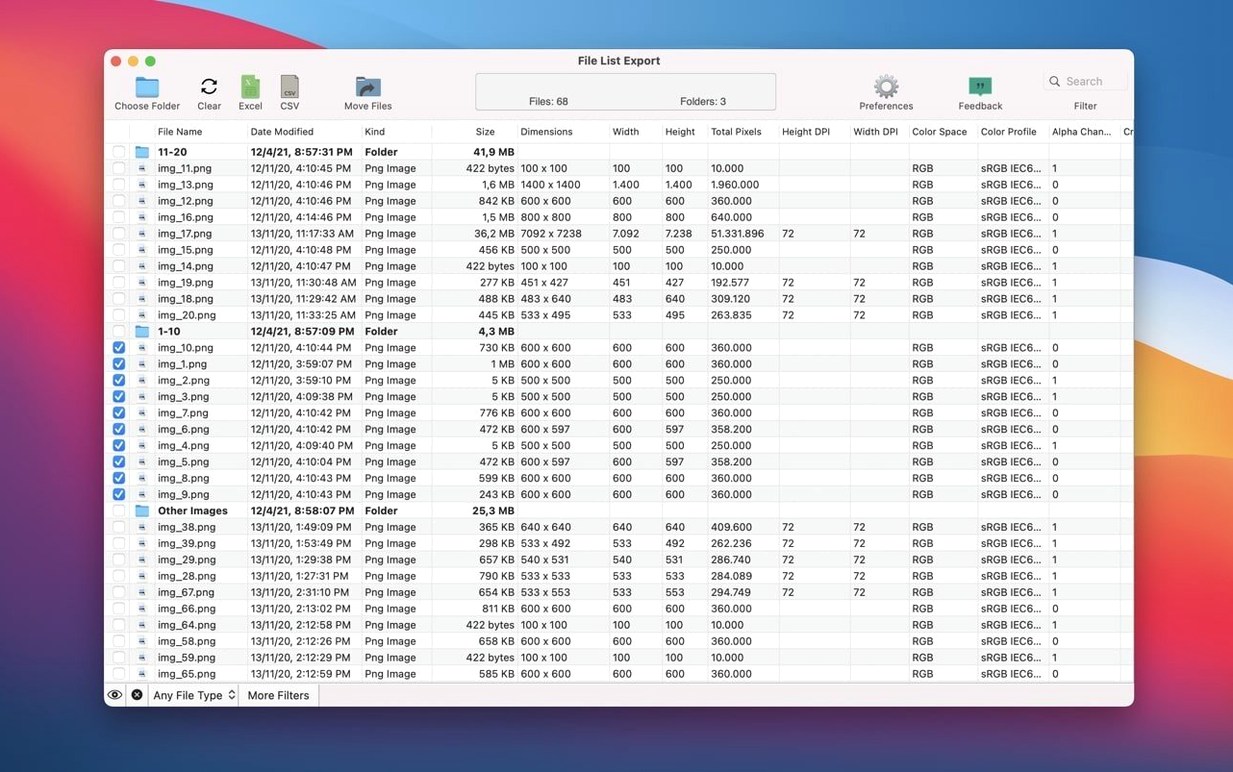
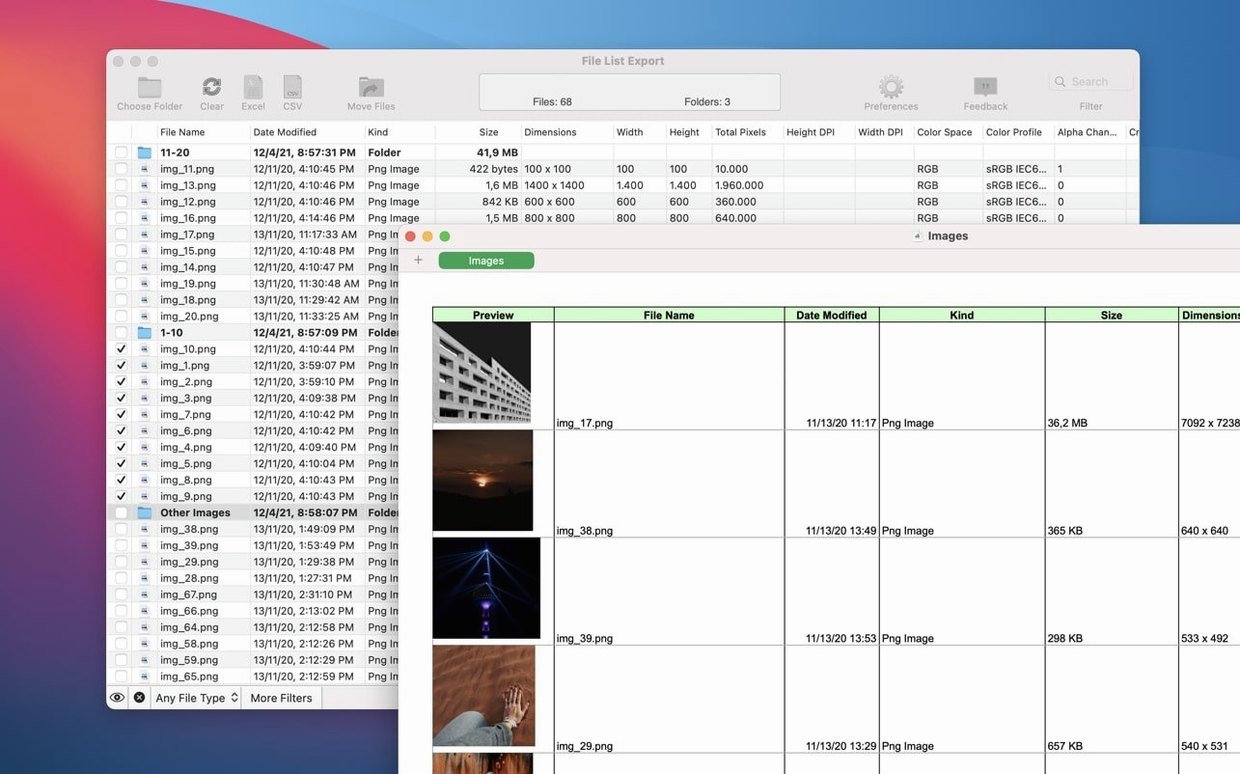
Digging through a maze of folders to get a simple text rundown of your files is a chore the Finder just wasn't built for. File List Export gives you that quick, readable index you can actually use elsewhere.
Select a folder or drag a few files in, and you instantly get a clean table of contents. It's the fastest way to see exactly what's in a project directory.
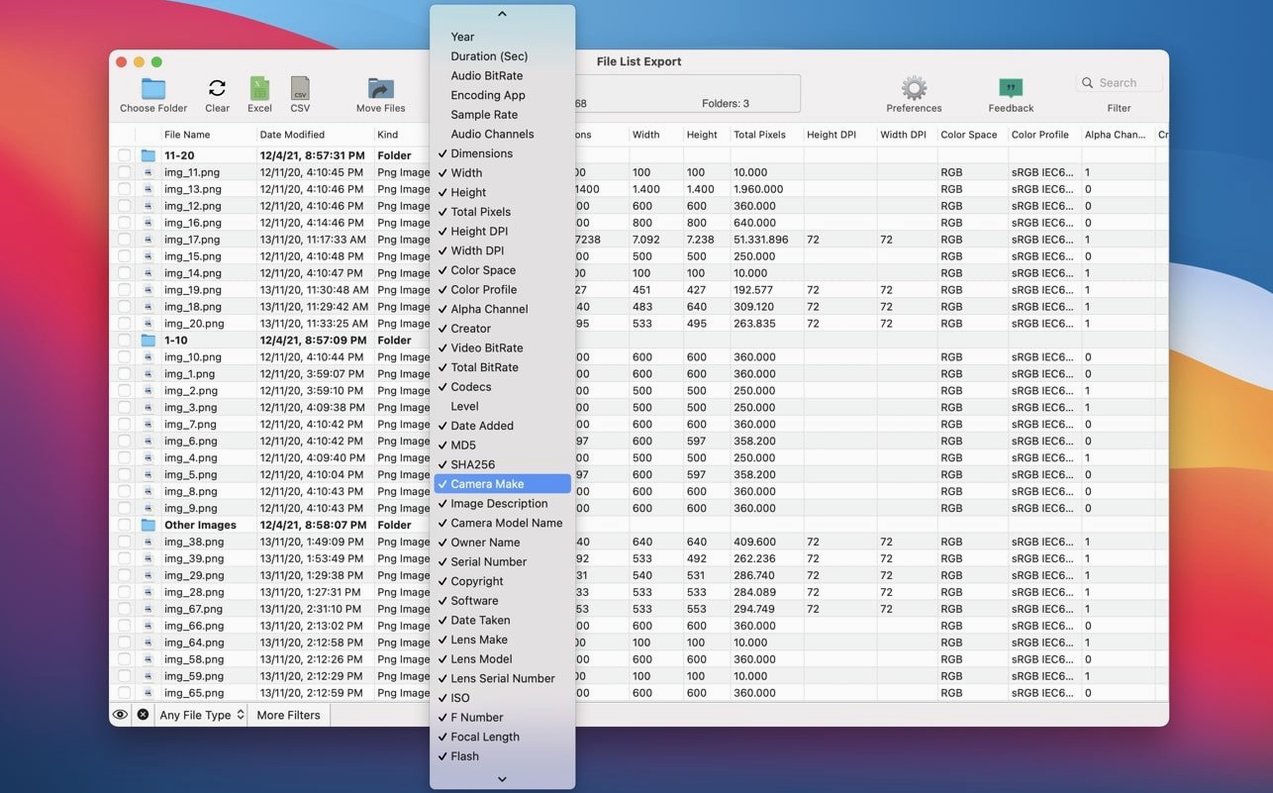
Export an Exif metadata list to log camera settings, dates, and now even pixel width and height for a batch of images.
Compared with NeoFinder, which builds a persistent catalogue database you can search offline, File List Export feels quicker for one-off jobs. NeoFinder is great for tracking external drives over months, but when you just need a CSV of today's shoot, the simpler approach wins.
DiskCatalogMaker keeps a browsable replica of your folder structure, complete with thumbnails. It's a visual tool first. File List Export skips the thumbnails and goes straight to a flat, sortable spreadsheet — faster when the goal is raw data, not a pretty mirror of your drive.
A Better Finder Rename overlaps slightly because it can export file lists before a rename operation, though its export options are slimmer. For an Excel-ready file list export with EXIF, audio tags, and checksums already mapped to columns, File List Export does more without needing a rename step.
On an Apple Silicon Mac, scanning 1 200 raw photos and exporting the lot to CSV with EXIF fields took around seven seconds. The window stays responsive while it works — no beachball, no guesswork. Memory use stayed modest, hovering near 120 MB during that run, and the app idles near 50 MB when you're just browsing the preview table.
Column sorting is immediate even with a few thousand entries loaded. The latest 3.1 build hasn't shown a single crash in a week of light daily use across both Monterey and Sonoma. It's a stable, unflashy tool that sits quietly until you call on it.
If you regularly pull together a file list export torrent-style from a folder of mixed downloads — say, video clips, PDFs, and audio — the built-in md5 and sha256 columns are handy for spotting duplicates or verifying integrity later, all before the data leaves your desktop.
Create a text list with artist, album, track length, and bitrate pulled straight from your audio files, including everything in the subfolders.
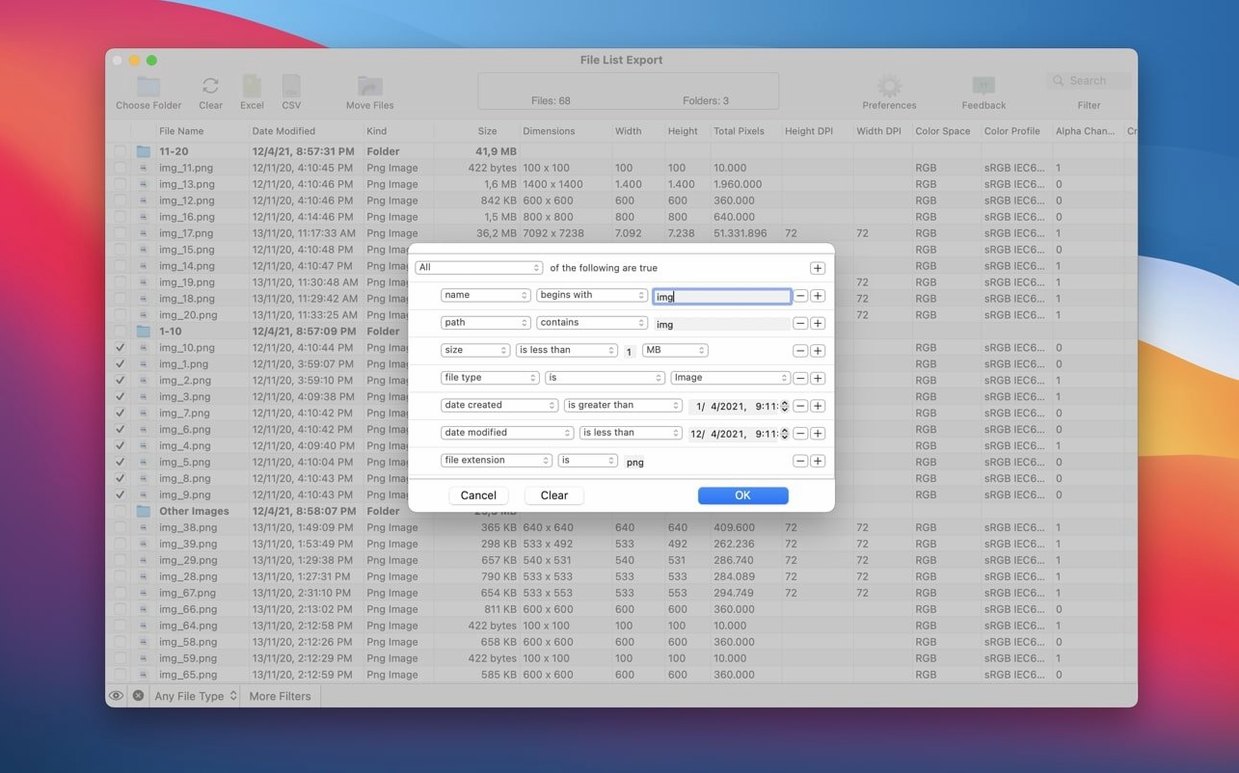
Two smart fixes speed things up when you're working with filters.
Now requires macOS 12 Monterey or later.
Yes, you can search and filter file entries instantly to narrow down the records before you save a copy.














Chat 0
Hop in or make an account to join the chat.
Quiet in here so far. If you have used this build, tell me what the install actually did.