
 Ghost Buster Pro
 Gemini
 Garden Planner
 Guitar Pro
 FxFactory Pro
 Guitar Rig
 FotoMagico
 ForkLift


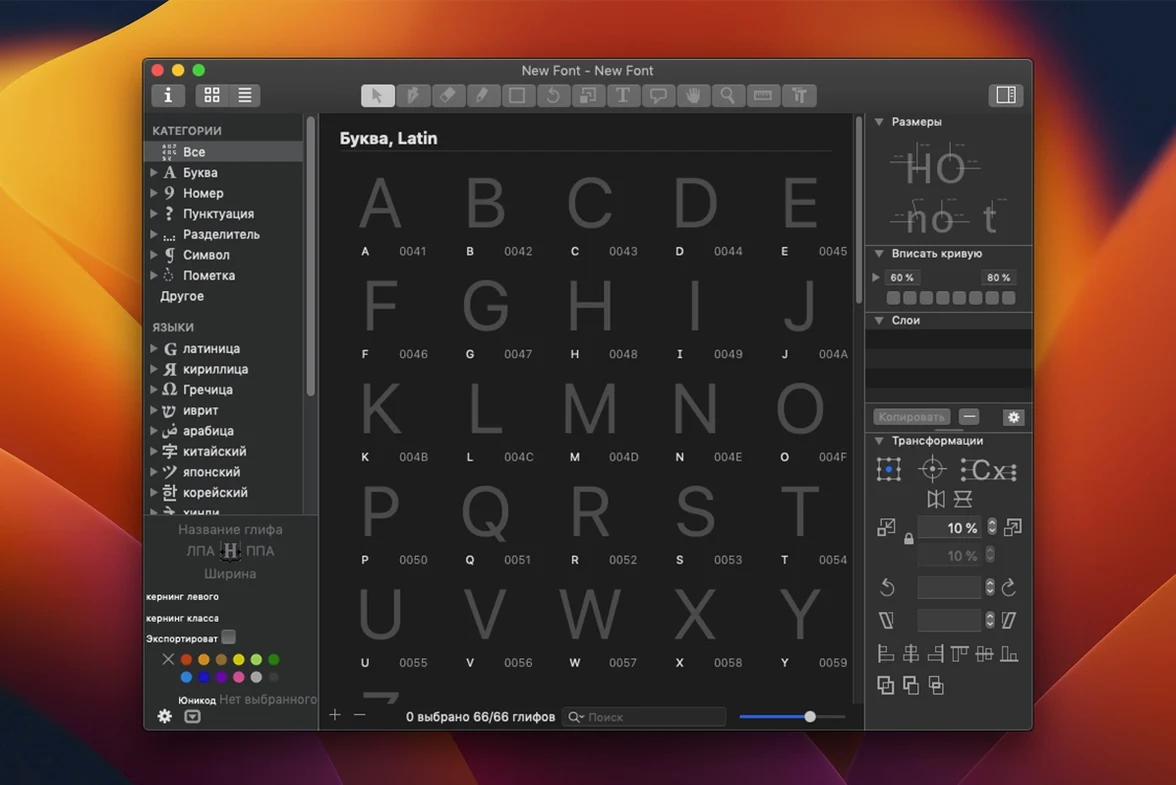
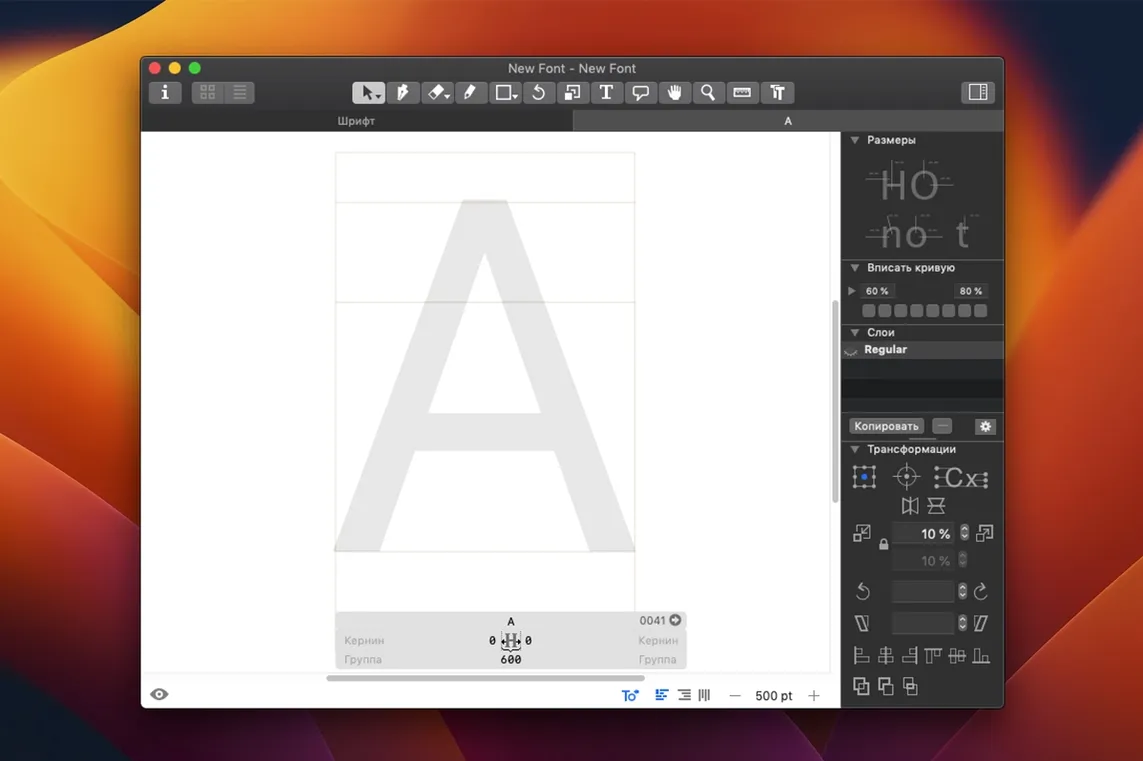
Type designers, foundries, and curious illustrators reach for Glyphs when they need a clean, focused place to draw and produce OpenType fonts. Everything on screen serves the drawing, spacing, and testing flow — no buried panels, no noise.
It keeps only the tools you need for the job. Contextual menu text editing, script support, and a tight interface mean you spend more time shaping curves and less time hunting through menus.
Alongside full OpenType fonts, you can export PNG, SVG, PDF, and SFSymbols directly — handy for presenting specimens or feeding icon workflows without a second app.
Build 4.1.1 runs natively on both Apple Silicon and 64‑bit Intel Macs with macOS 12 or later. The release notes, dated 2026‑09‑12, refine an editor that’s already trusted by professional type designers.
You start with a blank file or an existing UFO project you dragged onto the dock icon. The window opens to the Edit view — a familiar split layout with a glyph canvas on the left and a sidebar on the right. You pick a character slot, double‑click, and the drawing area fills with the basic outlines.
You spend the first ten minutes on the lowercase ‘a’. A click adds a node, a drag rounds the curve. Holding Shift keeps your handles horizontal, so the bowl stays symmetrical without guesswork. You switch to the Preview panel with a tap of P, and a string of pangrams fills a floating window — live, with your half‑finished letter slotting into real words. Something looks tight in the ‘av’ pair, so you open the Kerning window, type the pair, and nudge the right glyph left by two units. The preview updates immediately.
Lunchtime comes, and you’ve roughed out six lowercase letters, set sidebearings with the arrow keys, and exported a quick PDF specimen to send to a colleague. You haven’t opened another app all morning.
A few things tend to stay hidden until someone points them out. The Transform panel, for example, accepts basic arithmetic — type *1.2 after a value and the entire selection scales by 20 percent. No need to reach for a calculator.
When you’re spacing, holding Ctrl while dragging a sidebearing snaps to a multiple of your grid step. It sounds tiny, but it saves you from cleaning up fractional values later. In the Layers panel, copying outlines from one master to another is as simple as dragging while holding Option. If you set up a few custom shortcut keys through the Preferences window, switching between the Hand tool and the Pen tool becomes a single‑finger gesture, not a trip to the toolbar.
Right‑clicking any glyph cell in the Font view gives you a contextual menu that includes quick access to Edit, Preview, and Copy Glyph Name. The last one is surprisingly useful when you’re writing features or building OpenType substitutions later.
Does it work with files from other font editors? You can open UFO, OpenType, and TrueType files. Round‑tripping through UFO keeps your workflow flexible — many designers draft in their old tool and finish in Glyphs.
Will it slow down a large font family? The app handles multi‑master setups and large character sets without lag. The current build runs natively on Apple Silicon, so switching between masters and interpolating weights feels immediate even on a fanless MacBook.
Is there a companion for quick previews? Yes, Glyphs Viewer comes bundled. While you work, it mirrors what the main app sees, so you can stick the viewer on a second display and watch your changes ripple through a full test paragraph.
What about scripting? The built‑in script panel supports Python, and a handful of community scripts ship with the app. You can write a ten‑line script to batch‑adjust sidebearings or generate alternate sets, and the Console prints errors clearly enough to debug on the fly.
If you’re curious about trying the workflow before committing to a full project, many designers search for glyphs for mac or browse discussions about glyphs 3 free download threads to understand the feature set. Those searches often lead people to this version, which includes everything needed for professional OpenType production right away.
Glyphs 4.2 (4200) arrives with a fresh batch of under‑the‑hood fixes that keep every curve and contour behaving predictably.














Chat 0
Hop in or make an account to join the chat.
Quiet in here so far. If you have used this build, tell me what the install actually did.