

Download Arturia Emulator II V for macOS
A software instrument that puts the crunchy 8-bit soul of the E-Mu Emulator II into your DAW.
Breathy choirs, grainy strings, and drum layers
Lead tracks — a natural home for the breathy choir and grainy string patches that defined 80s records.
Texture buses — send the 27.7 kHz output through a long reverb for instant lo-fi atmosphere behind cleaner elements.
Drum layers — layer the kick or snare samples under a modern hit to add weight without losing punch.
Basses with resonant VCF and layered moving pads
Dial in a bass patch with the resonant VCF to anchor a synthwave track. Stack two layers with separate ADSR envelopes and LFOs for pads that move. The 8-bit companding engine adds a gentle fizz that sits beautifully in a mix without fighting for space.
No original hardware required
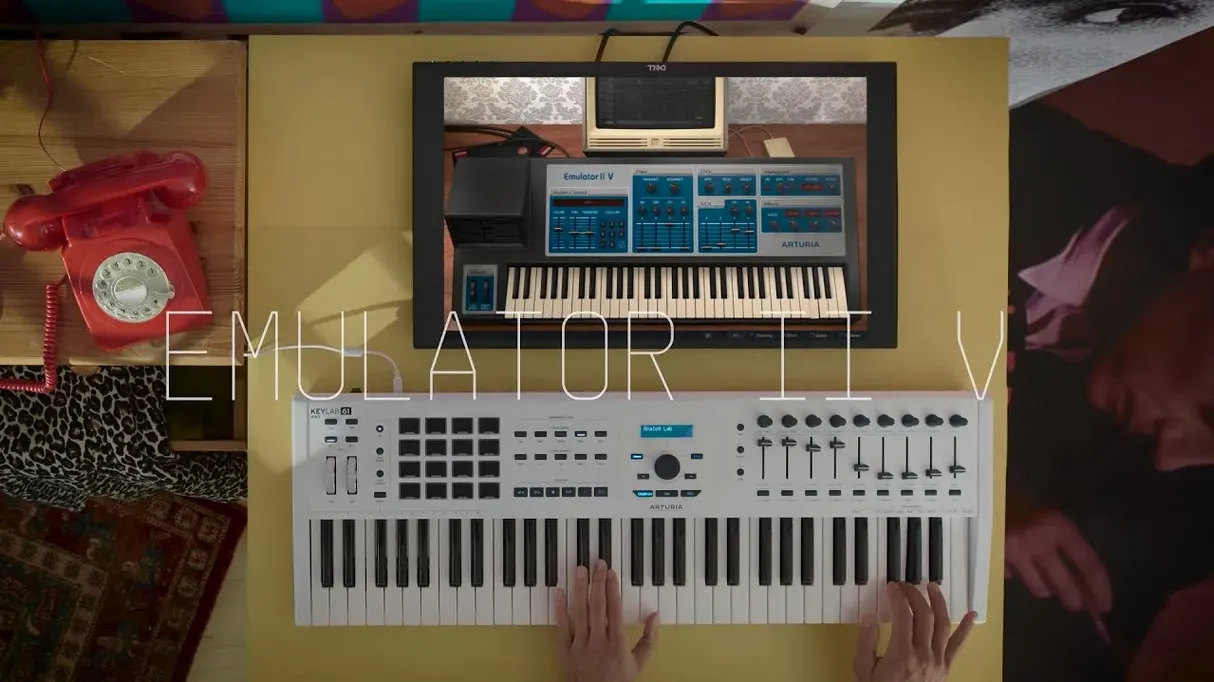
Does it need the original hardware to work? Not at all. The plugin runs as a standalone instrument or inside any DAW that hosts AU, VST3 or AAX — no E-Mu chassis required.
Will it slow down an older Mac? It runs on macOS 11 and later on both Intel and Apple Silicon. The voice count and effects chain are the main CPU draws. On an M1 or M2 machine you can stack eight multitimbral layers with the arpeggiator running and barely nudge the meter. On older Intel Macs, freeze a track or two if you go heavy on the reverb sends.
Is the sample library locked? You can load your own samples just as easily as the curated ones. Drag a WAV onto the interface and the engine runs it through the same 8-bit companding path the factory sounds use.
27.7 kHz and 8-bit companding are features, not flaws
Treating it like a clean rompler. This thing samples at 27.7 kHz with 8-bit companding. Crank the output gain expecting pristine highs and you will get a fizzy top end — that is the point. Lean into the grain instead of fighting it.
Skipping the VCF per layer. Each layer has its own resonant filter with dedicated ADSR. Beginners often tweak only the amp envelope and wonder why the sound stays static. Shape the filter cutoff and envelope amount per layer and the patch wakes up.
Ignoring the arpeggiator as a modulation source. The arp is not just for note patterns. Route its output to modulate pitch or filter cutoff on a second layer and you get rhythmic textures that breathe with the sequence.
Synthwave producers get mix-ready 80s tones instantly
Synthwave and retro-electronic producers reach for it daily. The factory choir, strings and brass sit in a mix exactly where those sounds sat on 80s records — no extra EQ needed. Stack a bass patch under a modern serum line and the low end gains character without turning muddy.
Sound designers building lo-fi kits appreciate that every sample path runs through the original companding circuit. Export a clean 24-bit recording of a glass hit, drag it in, and the output comes back with the same grit as a factory patch. That consistency across user samples and presets makes it a reliable texture machine — something many arturia v collection mac torrent seekers discover after their first session.
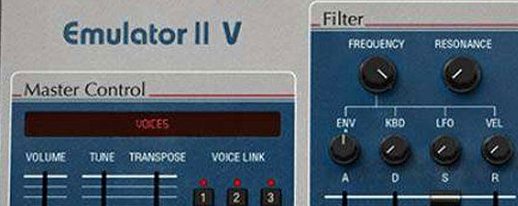
Keyboard players who grew up with hardware feel the muscle memory click in. The interface shows editable parameters graphically — filter slope, ADSR curves, LFO routing — so you spend less time in menus and more time playing. The 250 original presets cover the bread-and-butter E-Mu sound palette without scrolling through filler.
32 voices per instance, stackable across tracks
The 32-voice polyphony limit is per instance. Drop three instances into a project and you have 96 voices to spread across layers, each with its own effects chain and modulation routing.
- macOS 11 or later
- Apple Silicon or Intel processor
- English interface
Questions I get
No, it's a full recreation of the original hardware's 8-bit companding engine and 27.7 kHz sample rate, with added modern effects, extra modulation and a graphical interface for editing parameters.







Chat 0
Hop in or make an account to join the chat.
Quiet in here so far. If you have used this build, tell me what the install actually did.