

Download Effectrix for macOS
You drop a kick drum onto a channel, load Effectrix and draw a quick pattern that slices, reverses and rings out the tail every fourth beat. In under a minute the loop has a glitchy, breathing shape it never had dry.
Painting motion with the step grid
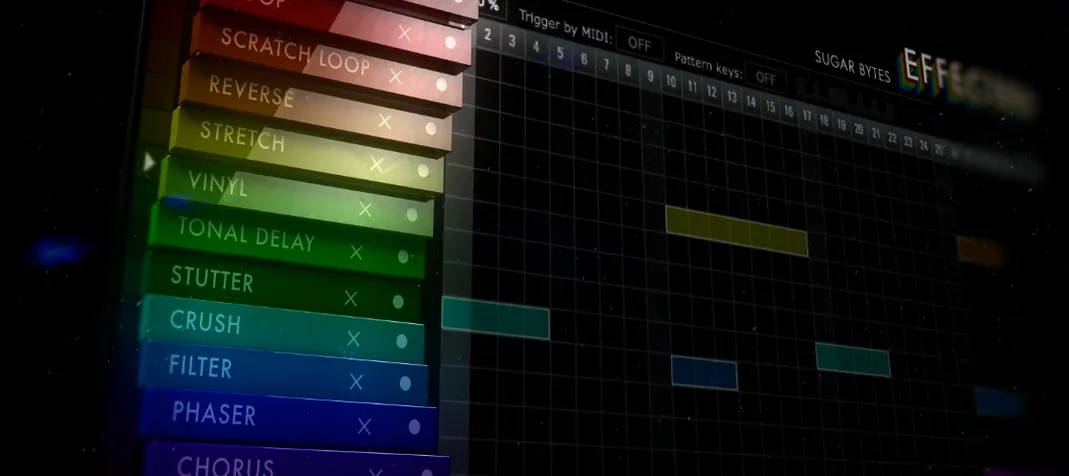
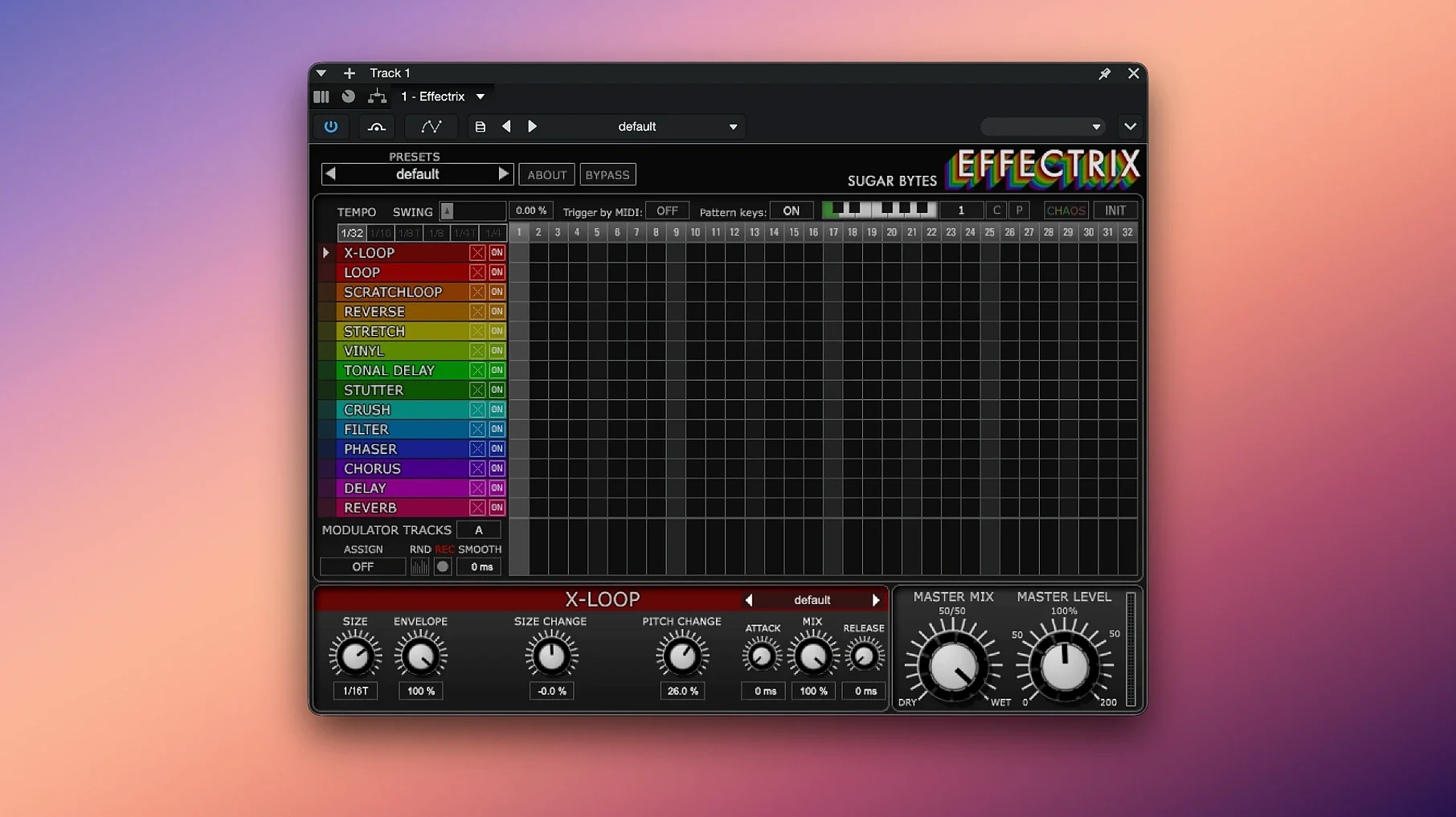
Each of the 14 effects sits on its own lane. You click blocks into place across the grid, keeping everything locked to your host tempo. A delay might fire only on the last two steps of a bar; a lo-fi crush could duck in and out on offbeats. Because every effect carries its own set of parameters, you can tune the ring-mod depth on one block without touching the reverb wash three steps later.
Keeping it human
The swing function nudges the grid off rigid quantization, so sequenced chops land with a little push and pull. Tap the Chaos button and probability scatters your pattern in the background—some blocks fire, others skip, and the result never quite repeats. Twelve snapshots can be recalled from a MIDI keyboard, which means you can jump between a subtle filter wobble and full stutter on the fly.
A beatmaker's third hook
Imagine a producer staring at a finished instrumental, two solid verses and a bridge, but the chorus still falls flat. They load Effectrix on the main synth bus, set the cycle to eight steps and layer a tight looper, a short reverse and a touch of the tonal delay. Three passes later the hook stutters, folds back on itself and finally pulls the ear forward. The rest of the track stays untouched—only that eight-bar section got the treatment, so the arrangement still breathes.
Beatmakers who treat loops as arrangements
Beatmakers who work in short, loop-driven sessions tend to reach for it first. The grid mirrors the step sequencers they already know, and drawing movement onto a static loop feels more like arranging than sound design. Live performers get mileage too—twelve recallable patterns mapped to a MIDI controller turn a laptop into a stutter-box that follows the setlist. Sound designers working on game or film cues get the most from the modulation tracks: assign an LFO to the ring-mod frequency or the reverb size and suddenly one snare hit tells a three-second story. If you build full arrangements from scratch, you will probably use it in bursts rather than across every channel.
Apple Silicon support dropped the Rosetta tax
Version 1.4 brought native Apple Silicon support, which removed the Rosetta overhead that used to spike CPU on M-series machines. Loading times dropped and preset browsing became snappier. The 16-step grid stayed the same, but the way it talks to modern DAWs is cleaner—AU, VST3 and AAX all sit comfortably on macOS 10.14 and later. Earlier builds would sometimes lose sync when you jumped between patterns during playback; that lock is tighter now, so a live performer switching from a triplet delay to a straight gate stays glued to the downbeat.
Good to know: When you save a preset, Effectrix stores all twelve pattern slots inside it. That means one .fxb file can hold an entire song's worth of sequenced effects, from the intro filter sweep to the outro glitch.
- macOS 10.13 or later
- Intel and Apple Silicon Macs supported







Chat 0
Hop in or make an account to join the chat.
Quiet in here so far. If you have used this build, tell me what the install actually did.